



Tarot Card of the Day: How to Draw & Read It
When you work with a tarot card of the day, how to draw and interpret it comes down to a quiet three-minute pause before checking your phone. You shuffle until your breathing settles, lay one card face up, and look at the colors or figures that immediately stand out.
This steady practice is for anyone who feels blank staring at the card or forgets their morning pull by lunchtime. You will learn simple steps to hold the deck, read the scene through your personal daily routine, and carry that gentle reflection into your evening without memorising dozens of traditional definitions.
In short
- A daily card draw works best as a short, consistent ritual: cleanse, breathe, ask an open question, draw one card, and sit with it for a minute before reading.
- Interpretation happens in three layers (your first impression, the traditional meaning, and how the card speaks to your actual day), so you never rely on memorized keywords alone.
- The real value comes at night, when you look back and see how the card showed up; that feedback loop is what builds intuition over time.
- If a card confuses or unsettles you, that's information, not a warning. Journal it, sit with it, or bring it to a personalized reading for deeper context.
What Is a Tarot Card of the Day?
A tarot card of the day is one card drawn at the start of your morning and used as a reflective lens for the hours ahead. It may highlight a quality to embody, a pattern to notice, or an invitation to pause before reacting. The card offers guidance for your attention, rather than a fixed forecast of what must happen.
One card can be enough because it gives your mind a clear thread to follow. A spread may offer several angles, while a single image leaves space to observe how its symbols, mood, and message appear in ordinary moments. You might notice the card’s energy during a conversation, while making a choice, or when your plans change. This practice becomes useful through attention, not through finding a perfect interpretation.
A daily pull also has a natural limit. When you are facing a significant relationship decision, a major life change, or a question with several connected parts, a fuller tarot reading can provide more room for context. The morning card is a gentle point of focus for the day, giving you a moment to listen inwardly and choose your next step with greater awareness.
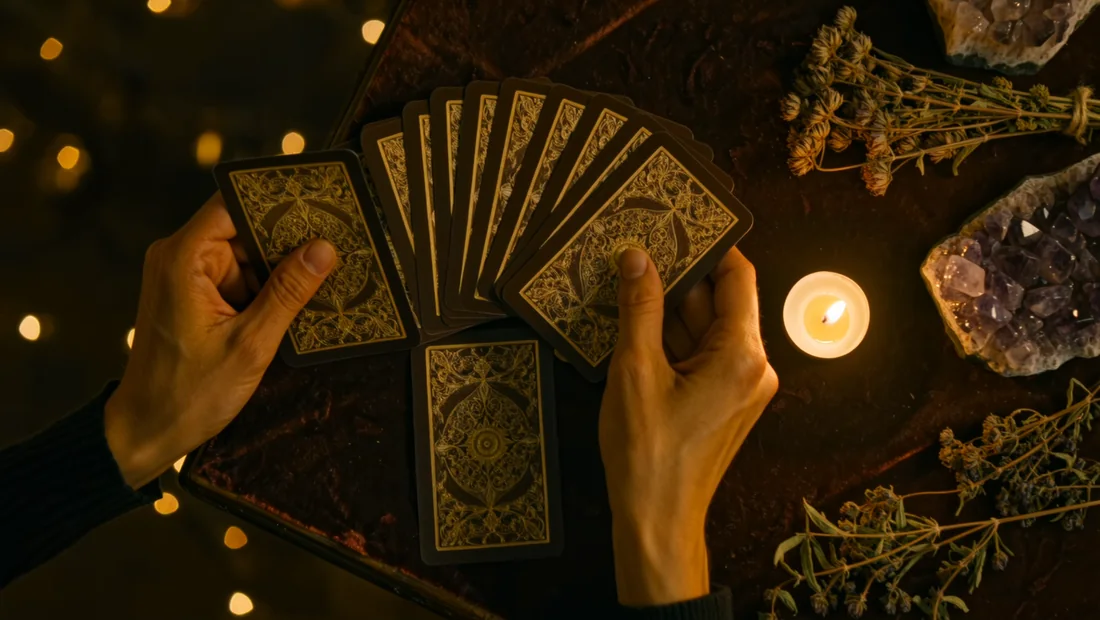
How to Draw Your Card: A Simple Morning Ritual
Clear the deck
Begin by choosing a quiet place and clearing the cards in the way that feels most natural to you. Tap the deck gently three times, shuffle it slowly, or pass it briefly through cleansing smoke. If you use incense or herbs, keep the cards away from the flame and let the smoke drift around them rather than through a thick cloud.
Set an open question
Hold the deck between both hands and take three slow breaths. Let your shoulders soften, then ask, “What do I need to know today?” You can use a similar prompt, such as “What energy can I work with today?” Open wording leaves room for practical guidance instead of forcing a yes or no answer.
Choose your card
Shuffle until your hands naturally want to stop. This may take ten seconds or several minutes. Before you begin, decide how you will treat reversed cards. You might read them as upright for now, or include their reversed meanings. Consistency will make your daily tarot practice easier to understand.
Notice your first response
Draw one card and place it face-up. Before consulting a guidebook, write down the first detail that catches your attention: a colour, figure, symbol, expression, or bodily feeling. Add one sentence about your immediate reaction. A card can speak through your personal associations as well as its traditional meaning.
Keep it in view
Place the card somewhere you will naturally see it during the day, such as your desk, bedside table, altar, or journal page. You can also take a phone photo for a private reminder. Return to it briefly before a decision, conversation, or change of plans.
How to Interpret the Card in Three Layers
Looking at your card through three distinct lenses frees you from flipping through guidebooks before you have even made sense of the picture.
Catch your initial reaction
Hold the card for twenty seconds and notice what catches your attention first. It might be a color, a tilt of the head, or an immediate knot in your stomach. Name that initial impression aloud in a single word, such as guarded, steady, or restless, before your analytical mind starts cross-referencing deck lore.
Layer in the traditional symbolism
Bring in the standard meanings you already know, letting them add texture rather than dictate a rigid answer. If the card sits reversed, treat the imagery as energy turned inward, delayed, or calling for quieter consideration rather than an automatic warning sign.
Anchor the message in your schedule
Look at your actual plans for the next twelve hours. Connect the card to the difficult conversation on your calendar, the chore you keep putting off, or the quiet moment you crave after lunch. The value of personalized spiritual guidance for emotional patterns is that it grounds symbolism in the kitchen, the commute, and the meetings you face today.
Distill it into a single action
Finish by writing one sentence in your notebook starting with: Today I will... Frame it around how you want to respond to the day, like choosing patience when an email frustrates you or allowing yourself to rest without guilt at four o'clock.
Sit with confusion instead of pulling another card
If the artwork leaves you blank, resist the urge to draw a replacement. Let the card sit upright against a mug on your desk, and notice whether ordinary events or casual phrases later in the afternoon cast a quiet light on why it showed up.

Common Mistakes That Weaken a Daily Draw
A daily pull stays useful when you give it one clear purpose, leave room for your own response, and return to it before the day ends.
- Pulling several cards for reassurance scatters the message. You end up comparing details instead of noticing the main thread. Draw one card and sit with it for a few quiet minutes.
- Questions that invite a yes or no answer make the reading feel restrictive. Open prompts work better: “What quality can support me today?” offers more practical guidance.
- Reading the guidebook before observing the image can cover up your first response. Notice the colours, posture, symbols, and the sensation the card brings up, then check its traditional meaning.
- Leaving the card on the table and forgetting it by lunchtime makes the practice easy to lose. Place a small note or phone reminder where you will see it, and write one sentence about how the card appeared during your day.
- Treating the message as a command creates pressure and takes choice away from you. Hold it as an invitation, then decide how its theme fits your circumstances, values, and available energy.
- If the same uncertainty keeps pulling you back to the deck, pause after one draw and write down what you hope a second card will settle. This often reveals the reassurance you are seeking.
A Sample Day: From Draw to Evening Reflection
A daily tarot practice becomes useful when you carry the card into ordinary moments, then return to it before bed. Picture a Tuesday morning: you clear a small space, rest your hand on the deck, and draw the Six of Swords. Before checking the guidebook, you write, “Quiet movement, leaving mental noise behind.” Add the date, the card’s position, and one open intention such as, “Where can I create more ease today?” That first impression gives the card a personal doorway.
By midday, you watch for the theme without forcing a sign. Perhaps you pause before replying to a tense message, take a different route home, or notice that your thoughts feel calmer after finishing one task. These moments do not prove the card predicted anything. They show how its image can sharpen your attention. If the theme stays quiet, record that too. A card can offer a gentle prompt that only becomes clear later.
In the evening, take two minutes to write three sentences: “Where did I notice the card?” “What surprised me?” and “What remained quiet?” You might write that the Six of Swords appeared through a calmer conversation, while its promise of movement did not connect with the day at all. This honest check-in keeps your reading grounded in experience. Over time, the morning impression, daytime observation, and evening reflection create a small feedback loop. Your intuition grows through noticing, recording, and reviewing rather than through pressure to find a perfect meaning. For a wider view of recurring themes, you can pair this habit with a personalised annual tarot reading for love and career guidance.
When One Card Isn't Enough
One card can gently name the mood of a day, while a recurring card or a heavy decision may call for more space. You might draw the same image several mornings in a row, feel unusually emotional when it appears, or keep returning to one choice about love, work, or a new beginning. These moments can be an invitation to pause and seek fuller context rather than pulling more cards in search of instant certainty.
A personalised reading gives the question room to unfold through several connected cards. It can add context around the people and patterns involved, offer a sense of possible timing, and show where your own choices may shape the path ahead. For a decision that has been circling your thoughts, a crossroads tarot reading for clarity can provide a calmer structure for listening to your inner response. A relationship question may benefit from a love and soulmate reading that looks beyond the single energy of the morning.
At SortiSpells, readings are prepared as private PDF guidance and sent by email, so you can read them at your own pace and return to the words when your feelings have settled. You may wish to underline a sentence, write down what resonates, and leave the rest until later. Your first consultation is free with the code WELCOME, giving you a gentle starting point when the daily pull has opened a deeper question.
Making It Stick: A 7-Day Starter Rhythm
You can build a steady daily tarot practice in seven gentle days by adding one small step at a time.
- On Day 1, draw one card at the same time and place you intend to use each morning, then write down a single word that describes your first impression.
- On Day 2, repeat the same process and notice one detail in the image, such as a colour, gesture, object, or direction of movement.
- On Day 3, draw your card, choose one word, and write one practical way that quality could guide your choices today.
- On Day 4, add the three layers: describe the image, name your emotional response, and connect the card with one situation in your life.
- On Day 5, use the same three layers and finish with a simple intention, such as listening carefully or allowing more time before replying.
- On Day 6, include an evening reflection by recording where the card appeared in your day, even through a small conversation or change of mood.
- On Day 7, repeat the full practice and review the week for recurring symbols, themes, or feelings before choosing what you want to carry forward; if you skip a day, simply begin again without guilt.
Keeping your deck, notebook, and pen together removes one small barrier, and a personal tarot reading can offer added perspective when your own notes feel unclear.
My picks



Draw one card each morning before the day fills up, breathe once, and ask something open rather than a yes-or-no question; that single minute of sitting with the image does more than any memorised keyword. Then note it in a journal and check back at night to see where it landed. If a card leaves you puzzled, that is worth sitting with, and a personalised tarot reading can help you read it in context.
When One Card Isn't Enough
If a daily card keeps pointing at the same theme, a personalized reading can give it context. Your first consultation is free with code WELCOME, delivered as a private PDF by email.
View Tarot ReadingsFrequently asked questions
Should I draw my card upright or allow reversals?
Either approach is fine, so choose before you shuffle and keep that choice consistent. Reading reversals can add nuance, such as an inward process, a delay, or a quality needing attention. They do not predict doom. If a reversed card feels confusing, compare it with the upright meaning and notice what changes in your situation.
What if I forget my card by the end of the day?
Forgetting your card is normal, and a quick reminder can help you reconnect with it. Take a photo after drawing, or leave the card somewhere visible, such as your desk. In the evening, spend two minutes recalling where its theme appeared, even in a small moment. That check-in helps the practice become familiar.
Can I draw a card for someone else?
You can draw a card for someone else, though daily draws are clearest when your question belongs to you. If another person asks for guidance, invite them to share a specific situation and consider a dedicated reading. Keep the card as an invitation to reflect, rather than a fixed statement about their choices or future.
How do I know if I'm interpreting it correctly?
There is no single correct interpretation, so begin with the meaning that helps you notice your day more clearly. Write down the first image, feeling, or phrase the card brings up, then connect it with something concrete. If the reflection supports a more aware choice, it is serving its purpose. Let experience refine your reading.
What if I keep drawing the same card?
Repeatedly drawing the same card often points to a theme asking for closer attention. Record the card, your question, and any matching events or feelings in a journal for several days. Notice what changes in your understanding. If it continues to appear, a deeper reading can give you more space to examine the message.
Tarot readings and spiritual guidance are offered for personal reflection and entertainment. They do not replace medical, legal or financial advice.
Related posts
 Three of Wands in Tarot: Meaning, Love & Reversed
 Celtic Cross Tarot Spread: How to Read It
 Wheel of Fortune Reversed: Meaning & Guidance