


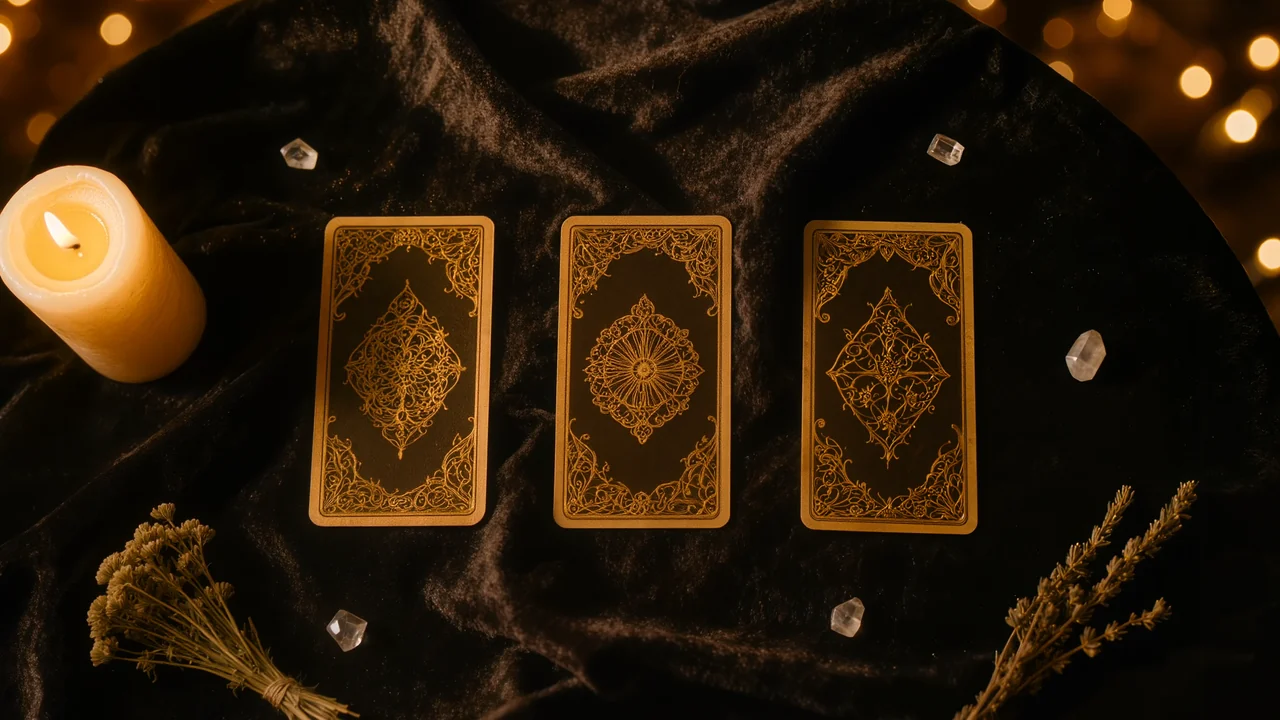
Three Card Tarot Spread Past Present Future: How to Read It
A three card tarot spread past present future can show how earlier experiences shape the present and where your current choices may lead; the future card is a possibility, not a fixed verdict. The card that feels most personal may sit in any position, so read the three as one story rather than assigning blame to the past or certainty to what comes next.
This guide is for anyone reflecting on love, work, a breakup, or a difficult decision who wants clear insight while keeping their own judgement. You will learn how to place and read each card, recognise repeating patterns without fear, and make sense of cards that seem to disagree. Before shuffling, place both feet on the floor, take three slow breaths, and write one honest question. When you finish, note the smallest practical step that feels calm and possible today.
In short
- The three card spread works best when you ask one honest, open question before shuffling, rather than a yes/no question.
- Read the past card as the root of the situation, the present card as what is true right now, and the future card as a direction, not a fixed outcome.
- If the three cards seem to contradict each other, that is information: it usually means part of you is already moving on while another part is still holding on.
- When your own reading feels stuck, a written tarot reading by email can offer a second, calmer pair of eyes on the same three cards.
What the Past Present Future Tarot Spread Actually Shows You
The three card tarot spread past present future shows how a situation has unfolded, what is true in the moment, and where its energy may be tending. It can help you place a relationship, a decision, a job change, or a repeating pattern into a clear sequence without asking the cards to decide your life for you.
The past card points to the root of the matter. It may reflect an earlier choice or a feeling that shaped the situation, and sometimes a pattern that still has an influence. In a relationship reading, this could be the beginning of a bond, an old disappointment, or something left unsaid. The present card brings your attention to what is active now: the conversation you are avoiding, the hope you are holding, the information already visible in front of you. This position often helps separate current facts from old fears.
The future card shows the direction the energy is moving if the present pattern continues. Treat it as a tendency and an invitation to pay attention rather than a fixed sentence, since your choices, other people's choices, and new information all shape what follows. Three cards are often enough because each one receives your full attention. With fewer symbols on the table, you can notice the image and your first response, then follow the thread that connects the positions. A focused reading can offer a steadier starting point than pulling card after card in search of certainty. For a deeper perspective on a personal situation, you may also consider a personalised tarot reading.
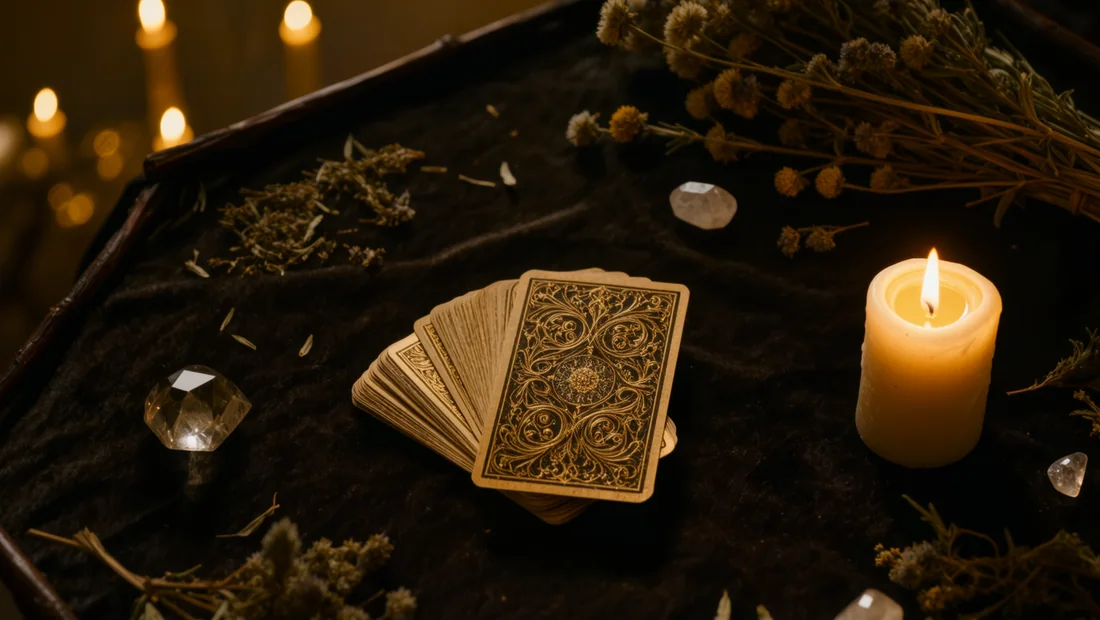
How to Lay Out and Read the Three Cards, Step by Step
You can read a three card tarot spread past present future in five quiet minutes by giving each card a clear place, then listening to the story they create together.
Write one question
Before touching the deck, write your question in one sentence. Keep it focused on your experience and the choice in front of you, such as, “What do I need to understand about this relationship now?” or “What would help me approach this work decision wisely?”
Writing gives your mind somewhere to return when a striking image or difficult card pulls your attention away.
Shuffle until your hands feel done
Hold the question in mind as you shuffle. Let the cards move at a natural pace, and stop when your hands feel complete. Counting to a particular number can make the process feel like a test, while your physical sense of readiness gives you a simple stopping point.
Lay the cards from left to right
Place three cards in a line, leaving a little space between them. Turn over the left card and say, “This is the past.” Turn over the middle card and say, “This is the present.” Turn over the right card and say, “This is the future.” Speaking each position aloud helps your attention settle.
Describe what you see first
Before opening a guidebook, name the details that catch your eye. You might notice a figure facing away, a crowded landscape, a bright colour, or a tense posture. Write two or three plain words for each card, along with the feeling it brings up.
After that, consult your book for context. Let its meaning add depth to your first impression rather than replacing it.
Read one connected sentence
Join the cards into a single sentence: “Because this happened or was learned, I am meeting this now, and it may lead towards this direction.” The past card can explain a root, the present can name what is active, and the future can show a possible movement.
Choose one action and one release
Write one small action the reading suggests, such as sending a clear message, setting aside twenty minutes to research a choice, or resting before responding. Then write one thing you will stop doing for now, perhaps checking for signs repeatedly or making a decision from panic.
If your cards point towards a difficult choice, a written crossroads tarot reading for a decision can give you another calm perspective to sit with by email.
The Questions to Ask Before You Shuffle
Before you shuffle, give the reading one open question that helps you understand the situation rather than forcing the cards into a yes or no.
- Yes-or-no questions can flatten a three-card spread because they leave little room for the past, present and future positions to show context, feelings and possible direction.
- For love, ask “What is really happening between us?” when the connection feels unclear, or “What am I not seeing in this relationship?” when your emotions are filling in the gaps.
- If you are considering contact after a separation, try “What would help me approach this situation with care?” instead of asking if the other person will come back.
- For work or money, ask “What is blocking my progress right now?” or “What would help me move forward with greater clarity?” so the cards can point towards useful choices.
- You can also ask “What do I need to understand about this opportunity?” when a new role, project or financial decision is taking up your thoughts.
- For a pattern that keeps returning, ask “Where does this pattern come from?” or “What is mine to carry, and what can I release?” while allowing the answer to unfold gradually.
- Keep one question for each reading, since combining a relationship concern, a work decision and a family worry can make the three positions difficult to connect.
- Write your question on paper before shuffling, then read it aloud once and pause for a few breaths; if the wording feels anxious, soften it into a request for insight and practical guidance.
- For focused support with matters of the heart, you can pair this practice with Love & Soulmate Readings, while work-related concerns may suit Career, Finances & Work Psychic Reading.
How to Read Each Position Without Scaring Yourself
Read each position as a layer of the situation, rather than as a fixed prediction about your life. The past card points to the root: a belief, choice, habit, wound, or earlier event that still shapes the question in front of you. It may explain why a familiar feeling has appeared in a relationship or why a work decision carries extra weight. It does not mean the past is returning. Ask, “What influence from before is still asking for my attention?” A difficult card here can name something you have already survived, or a pattern ready to be understood with greater kindness.
The present card is usually the most actionable card in the spread. It describes the emotional weather, practical circumstances, and part you are playing today. Look closely at what the figure on the card is doing, avoiding, holding, or moving towards. Then write one honest sentence about your current position. For example, the card may suggest that you are waiting for reassurance, protecting your time, or giving more than you have the energy to give. This position can guide one small choice within your control, such as asking for clarity, resting before replying, or gathering more information.
The future card shows a direction of travel shaped by the present conditions. It can change when your actions, boundaries, or understanding change, so treat it as guidance rather than a promise. If a challenging card appears there, let it serve as a preparation signal. You might slow down, check an agreement, make space for an honest conversation, or seek support for an emotional pattern through a personalised shadow work tarot reading. A warning gives you room to respond with care; it does not decide what must happen.
When the same card appears across several readings, pause before pulling more cards. Record the question, date, card position, and your first feeling, then look for the theme that remains present. Repetition may invite you to practise a quality, face a recurring choice, or notice what you keep postponing. Give the message a few days to settle before reading again. Your own response is part of the interpretation, and a trusted reading should leave room for reflection, choice, and emotional safety.
When the Three Cards Seem to Contradict Each Other
When three cards seem to contradict each other, read the tension as information about your situation or your own mixed feelings. A hopeful future card beside a guarded present card may show that one part of you wants to move forward while another is still protecting an old wound. The spread can hold both truths at once.
Look closely at the images before reaching for another card. Which figures face each other, and which turn away? Do any symbols appear to answer, challenge, or echo one another? Give extra attention to the middle card, since it describes the energy you are living with now and may explain the shift between the past and the possible direction ahead. Write one sentence for each position, then add a fourth sentence beginning, “Together, these cards suggest…” This often reveals a thread that is easy to miss when you read each card alone.
Check the question you asked before shuffling. “What will happen with us?” can carry several concerns about contact, commitment, healing, and timing. A narrower question such as “What do I need to understand about my next step in this relationship?” gives the cards a clearer place to speak. If the wording was vague or your emotions feel too strong, stop pulling cards. Leave the three where they are, take a photograph, and return to your notes tomorrow. A day of distance can make the pattern easier to see.
If the same three cards still feel tangled, sharing them with someone else can offer a calm second perspective. A personalised written tarot reading lets you hand over the exact cards, positions, and question while keeping the interpretation grounded in your context. Treat their insight as an additional perspective, then keep the choice that feels honest and workable for you.
A Gentle Ritual to Close Your Reading
Write the sentence
Write the one sentence your reading gave you in plain language, using your own words. Keep it short enough to fit on one line, such as “I need patience before making my next move” or “I am ready to ask for clearer communication.” This sentence becomes a quiet record of what you heard today.
Close the cards
Place the three cards face down and take one slow breath. If you lit a candle, blow it out safely. Thank the cards, your intuition, or the reflective space you created. You can then gather the deck and wrap it in a cloth, return it to its box, or leave it somewhere calm.
Choose one small action
Pick a practical step for the next 48 hours. Send one honest message, update one line of your CV, write down a boundary, or give yourself an evening without checking for signs. Choose something gentle and specific that reflects the sentence you wrote.
Leave the future card alone
Let the final card rest for the day. Re-pulling it straight away can turn reflection into a search for reassurance and make the message feel more confusing. If you still want clarity later, return to your written sentence first, then consider a fresh question with a clear purpose.
When to Ask for a Personal Reading Instead
Ask for a personal reading when you have returned to the same three cards several times and still feel more foggy than settled. A spread can give you a useful mirror, while a specific situation may need more room for context, timing, and the feelings you are carrying into the question. This can be especially helpful when another person’s intentions are involved, since tarot can offer reflection on the connection without claiming access to someone else’s private thoughts.
A written reading gives you something calm and tangible to revisit after the first emotions have softened. You send your question and the details you feel comfortable sharing, then receive a personalised PDF by email. You can read it slowly, underline the parts that resonate, and return to it when the situation changes. A personal tarot reading may suit you when you want one focused question, while a five-question tarot reading can give more space to several connected concerns.
Before sending your question, write one clear sentence about what you want guidance with, such as, “What do I need to understand about this relationship now?” Include the three cards you pulled if you would like them considered alongside your circumstances. The reading is offered as an intuitive perspective to support your own judgement and feelings. At SortiSpells, your first consultation is offered with the code WELCOME, giving you a gentle way to seek support when the cards have opened a question that you would prefer to hold with someone else.
My picks


Before shuffling, write one honest, open question and place it beside you; this small pause gives the three cards a clear thread. Read the past as the root, the present as what is true now, and the future as a direction that may change. If the cards clash, note where you are releasing and where you are still holding on. For a calmer second perspective, browse written tarot readings by email.
Let someone read your three cards with you
If your past present future spread still feels foggy, a written tarot reading by email can offer a calm second pair of eyes on the same question. Your first consultation is offered with the code WELCOME.
View Tarot ReadingsFrequently asked questions
Can I do a three card past present future spread for free?
Yes, you can do a three card past present future reading for free with any tarot deck and about ten quiet minutes. Choose a clear question, place the cards from left to right, and write down your first impressions. The free part is your own practice; a written reading can offer a second interpretation when you want another perspective.
What if the future card is a card I am afraid of?
A frightening future card shows a direction or theme, rather than a fixed event. Read its image alongside the present card and ask what preparation, boundary, or conversation could help you meet that energy with care. You might write one practical step in your journal, then return to the card later with fresh attention.
Should I read the cards left to right or right to left?
Read the cards from left to right as past, present, and future; this is the standard order. Your method can differ if you choose it before turning the cards. Decide where each position belongs, place the cards face down, and keep that sequence consistent so the interpretation remains clear.
Can I ask about a specific person in a three card spread?
Yes, you can ask about a specific person, while keeping the question centered on the situation and your part in it. Try, “What can I understand about our connection?” or “How can I respond with clarity?” This approach respects their privacy and gives you something practical to reflect on, such as a boundary or conversation.
How often should I repeat the same three card reading?
Wait before repeating the same reading, especially on the same day. Give the message time to settle, try the small step it suggested, and revisit the cards when the situation has genuinely changed. Keep your first notes nearby; comparing them with a later reading can show how your perspective and circumstances have shifted.
Tarot readings and spiritual guidance are offered for personal reflection and entertainment. They do not replace medical, legal or financial advice.
Related posts
 Three of Wands in Tarot: Meaning, Love & Reversed
 Celtic Cross Tarot Spread: How to Read It
 Wheel of Fortune Reversed: Meaning & Guidance