


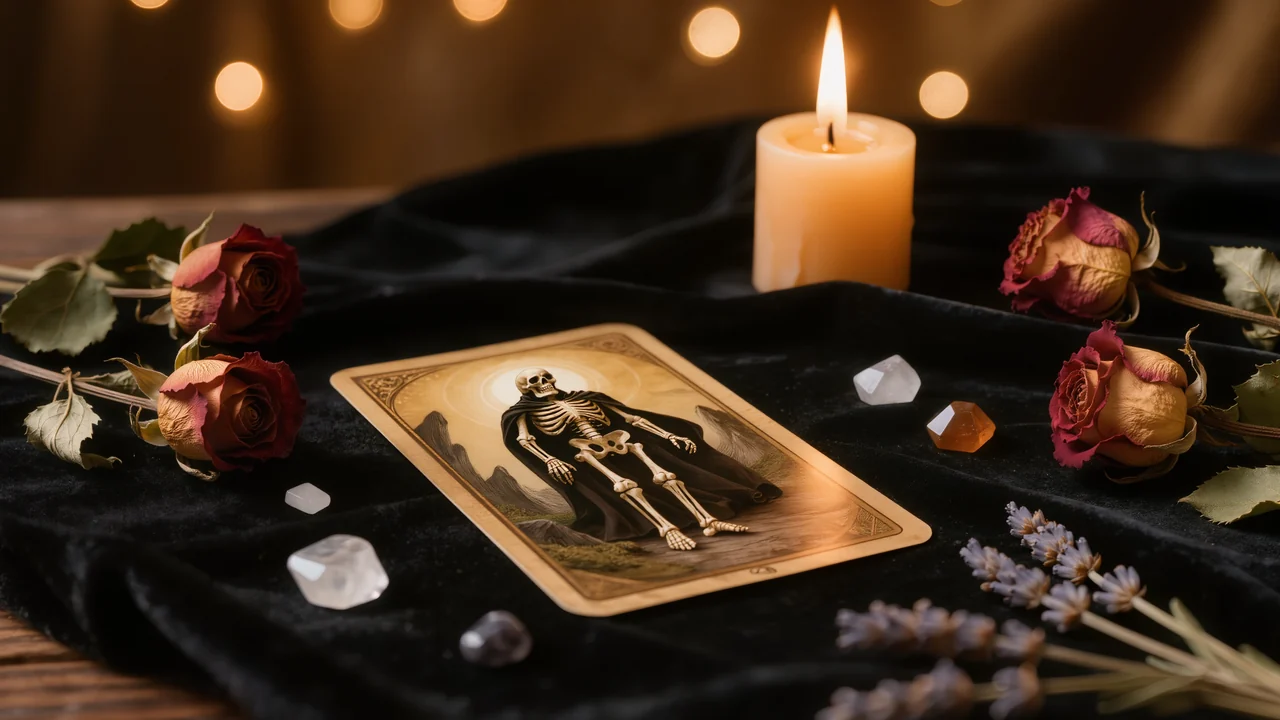
What Does the Death Card Mean in Tarot? A Gentle Guide
When you ask what the death card means in tarot, the card usually points to an ending, a release, or deep change. Drawing it does not predict a literal death or disaster; it can invite you to notice what has run its course, name the feeling it brings up, and choose one small step towards clarity.
This guide is for anyone feeling uneasy after a reading, particularly around love, separation, or the start of a new chapter. It offers grounded ways to read the card upright or reversed, shows how its meaning shifts in relationship readings and yes-or-no questions, and suggests a quiet ritual with a candle, some paper, and five minutes of reflection. I’m Benoit, and my readings, tarot pulls, and rituals are sent by email and remain available in your client area.
In short
- The Death card symbolizes endings, transformation, and rebirth, not physical death.
- Upright, it signals a necessary change; reversed, it suggests resistance or stagnation.
- In love, it can mean a relationship phase ending or a deep renewal.
- For yes/no questions, it leans toward 'no' or 'not yet', a sign to release and wait.
What Does the Death Card Mean in Tarot?
What does the Death card mean in tarot? It represents transformation, endings, and the closing of a chapter, rather than a prediction of literal death. As Major Arcana card 13, it often appears when an old pattern, situation, or identity is ready to change so that new growth can begin.
Seeing it can feel intense, especially if you are already worried about loss or uncertainty. In a tarot reading, the Death card usually points to a transition: leaving behind a habit, releasing an outdated expectation, or accepting that a familiar phase has reached its natural end. The card speaks about movement and renewal within life, relationships, choices, or personal understanding.
A helpful first step is to notice what has been changing around you and where you feel ready for closure. You can write down one chapter you are willing to release and one quality you would like to carry forward. This gives the card a grounded meaning and turns fear into a gentle invitation to meet change with awareness.
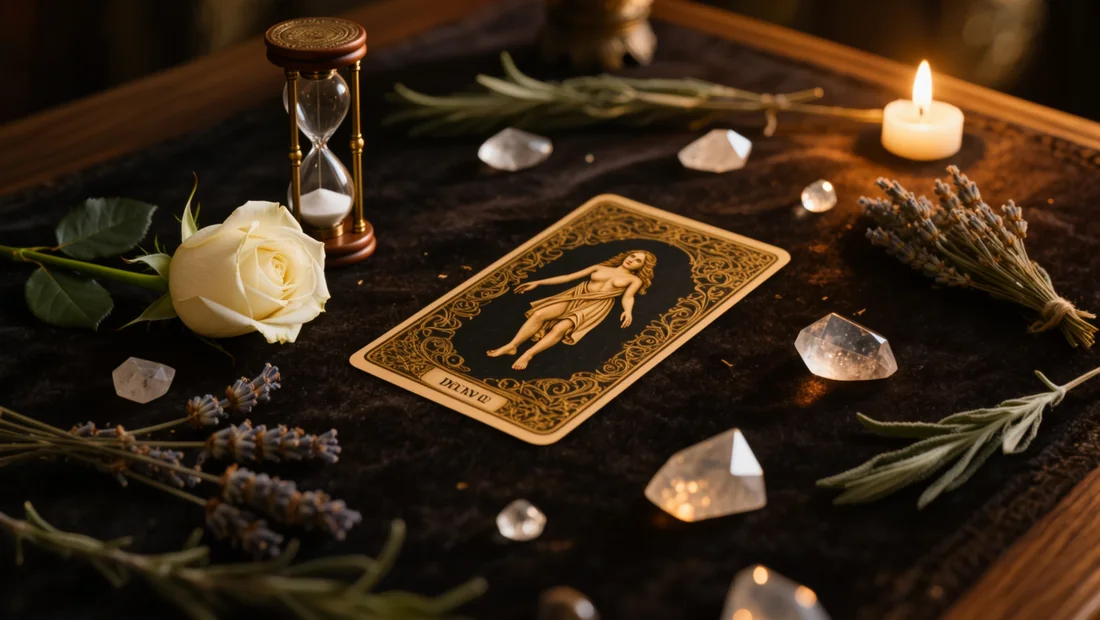
The Symbolism Behind the Death Card
The Death card uses calm, direct images to show that change is a natural passage from one chapter of life to the next.
- The skeleton or grim reaper represents change that eventually reaches every person, role and situation, regardless of status or personal preference.
- Its bare bones suggest that familiar appearances can fall away, leaving the essential truth of a situation visible.
- The white rose carried on the banner symbolises purity, openness and the first clean breath of a new beginning.
- The rising sun between the distant towers brings warmth and renewal, showing that an ending can make space for fresh energy and clearer direction.
- The fallen king shows that authority, pride and established structures cannot remain unchanged forever.
- The child looking towards the scene reflects innocence and willingness to meet change with curiosity, while the other figures show different emotional responses to the same transition.
- The river and boatman evoke the River Styx, a symbolic crossing between one state of life and another, where the boatman guides movement rather than forcing a destination.
- Together, these details create a picture of transition, release and renewal, so the card can invite you to notice what has finished and what is quietly beginning.
Upright Death: What It Means for You
When the Death card appears upright, it usually points to a necessary ending, a major transition, or a chapter that has reached its natural close. This may relate to a job, relationship pattern, home, belief, or daily habit. The card speaks to change in your lived circumstances and inner world, rather than predicting a literal death.
You may feel the shift through a growing sense of completion: an old routine feels empty, a familiar choice no longer fits, or you find yourself wanting clearer boundaries. The guidance is to release what keeps pulling you backwards and make room for what can grow. A practical first step could be clearing one drawer, ending an honest conversation, or writing down the habit you are ready to leave behind.
Upright Death often appears when you have more readiness for a fresh start than you realise. If the decision feels tender, a crossroads tarot reading for a decision can offer a calm perspective. For repeating emotional patterns, my personalised shadow work tarot reading may help you reflect with care.
Reversed Death: What It Means When the Card Is Upside Down
The reversed Death card usually points to resistance, delay, or fear around a change that already needs your attention. It does not predict a literal death or disaster. Instead, it may reflect the part of you that feels safer holding onto a familiar relationship, habit, identity, or past version of yourself.
You might notice this energy as repeated hesitation, returning to an old situation, or feeling caught between what has ended and what comes next. The card can also suggest stagnation when grief, guilt, or uncertainty has been left unspoken. Its message is gentle: releasing something at your own pace may create more movement than forcing a quick decision.
Write down what you are afraid would happen if you let go, then circle the fear you can address today. A small action, such as clearing one drawer, sending one honest message, or pausing contact with an unhealthy pattern, can help you trust the process. If the past feels especially difficult to release, you may find a simple cord-cutting ritual for removing toxic ties supportive.
Death in Love and Relationships
In love, the Death card usually points to the end of a relationship phase rather than a literal ending or a prediction of death. It can appear when dating patterns, expectations, or an old way of relating has reached its limit. A period of distance, a difficult conversation, or a change in commitment may bring this shift into view.
For an established couple, this card can describe deep transformation and renewal. The connection may need more honesty, clearer boundaries, or a fresh agreement about what each person needs. If you are single, it may invite you to release attachment to a past partner or to patterns that keep leading you towards unavailable people.
Take the card as an invitation to speak plainly and observe what is changing in your feelings. Write down one pattern you are ready to leave behind, then name one quality you want to bring into future love. A personalised Love & Soulmate Reading can offer a reflective space for understanding these changes without treating them as fixed predictions.
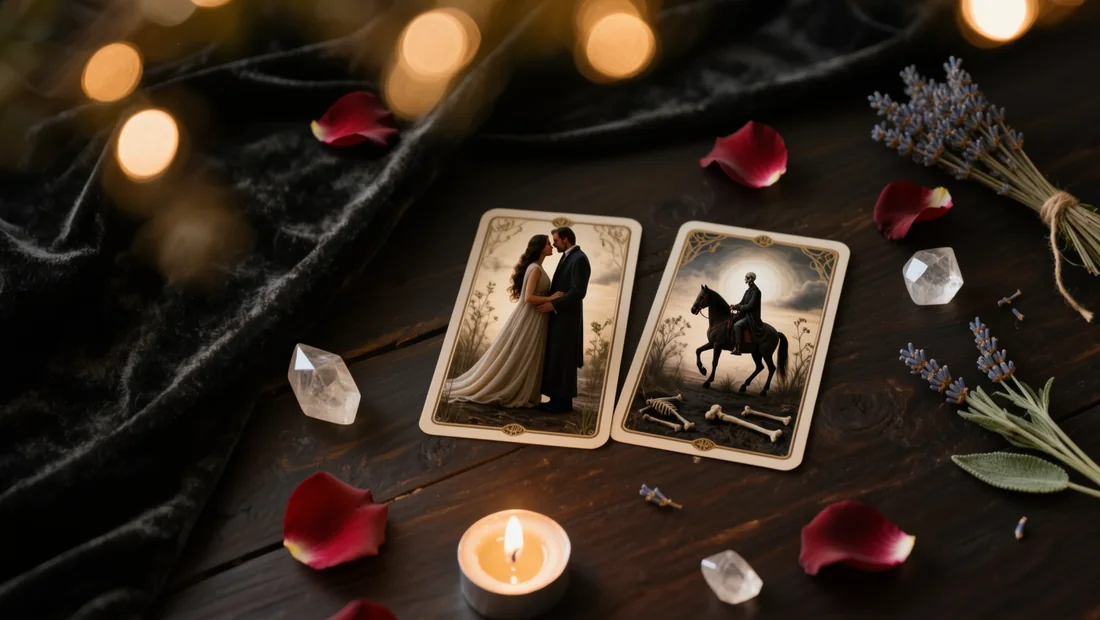
Death as a Yes or No Answer
For a yes-or-no reading, the Death card usually leans towards “no” or “not yet.” It suggests that the current situation needs to end, shift, or be released before a clear “yes” can emerge. The card speaks about the condition around your question, rather than delivering a fixed prediction.
If you asked about a relationship, job, move, or decision, consider what has reached its natural limit. Ask yourself which habit, expectation, or attachment is keeping the situation in its present form. Forcing an outcome may keep you tied to a version of the situation that is already changing. Giving yourself space can reveal what deserves to continue and what needs to be left behind.
You can also pair the card with a calm follow-up question, such as “What needs to transform first?” If you would like another reflective approach, I offer a pendulum reading for fast yes-or-no guidance, with the message sent by email and kept in your client space.
A Simple Ritual to Embrace Transformation
Write what you are ready to release
Take a small piece of paper and write down one thought, habit or old story that feels ready to change. Be specific: “I release the need to revisit that conversation” may feel clearer than “I release the past.”
Let the paper go safely
Place the paper in a fireproof dish and burn it outdoors or in a well-ventilated space. Keep water nearby and never leave the flame unattended. If burning does not feel suitable, tear the paper into small pieces and recycle or discard them.
Sit with the quiet
Spend five minutes breathing slowly and noticing what feels different in your body. You do not need to force an answer. Let the image of the Death card remind you that change can unfold one small choice at a time.
Ask for gentle clarity
When you feel settled, pull one card with the question, “What would support my next step?” Write down your first impression before consulting a guide. For a deeper, personal reflection, my Intuitive Tarot Reading and Full Moon Closure Guidance can offer another perspective, delivered by email and kept in your client space.
My picks

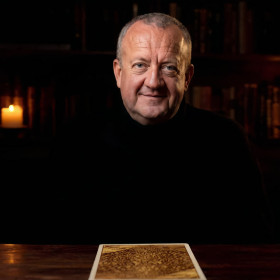

The Death card points to a threshold where an old chapter may be ready to change, rather than a physical ending. Write down one habit, expectation, or relationship pattern you are willing to release, then leave the note somewhere quiet for a week. This small pause can clarify whether renewal feels possible or whether waiting is wiser. For a personal perspective on a choice, see my Crossroads Tarot Reading & Decision.
Ready to Embrace Your Transformation?
If the Death card has appeared, you're at a powerful crossroads. I offer a Crossroads Tarot Reading to help you navigate change with clarity and confidence. Let's uncover what's ready to be released and what new beginnings are waiting.
View Crossroads Tarot Reading & DecisionFrequently asked questions
Does the Death card mean someone will die?
No. In tarot, the Death card usually symbolizes an ending, transition, or deep change rather than physical death. It may point to a habit, role, belief, or chapter that has reached its natural close. Read it alongside nearby cards, then consider what can be released with care and what new direction may follow.
What does the Death card mean in a love reading?
The Death card in a love reading often marks the end of a relationship phase and the beginning of a different one. It can describe changing expectations, an honest conversation, or renewed closeness after old patterns are released. A breakup is possible in some spreads, though surrounding cards and the question give the card its clearest context.
What does the reversed Death card mean?
Reversed, the Death card often points to resistance to change, stagnation, or fear of letting go. You may recognize a pattern that has finished serving you while still holding onto it for comfort or certainty. A gentle first step is to name what feels stuck and choose one small action that creates room for movement.
Is the Death card a yes or no?
For a yes-or-no question, the Death card usually leans toward “no” or “not yet.” It suggests that a transformation needs to happen before the situation can move forward in its present form. Look at what must end, be revised, or be released, and use the surrounding cards to clarify the kind of change involved.
How can I work with the Death card's energy?
You can work with the Death card’s energy through a simple release ritual. Write one habit, attachment, or outdated expectation on paper, read it aloud, then tear the paper and recycle it. Take a few quiet minutes to notice what you want to make space for. I can also offer a tarot reading focused on letting go, sent by email and available in your client area.
Tarot readings and spiritual guidance are offered for personal reflection and entertainment. They do not replace medical, legal or financial advice.
Related posts
 Three of Wands in Tarot: Meaning, Love & Reversed
 Celtic Cross Tarot Spread: How to Read It
 Wheel of Fortune Reversed: Meaning & Guidance