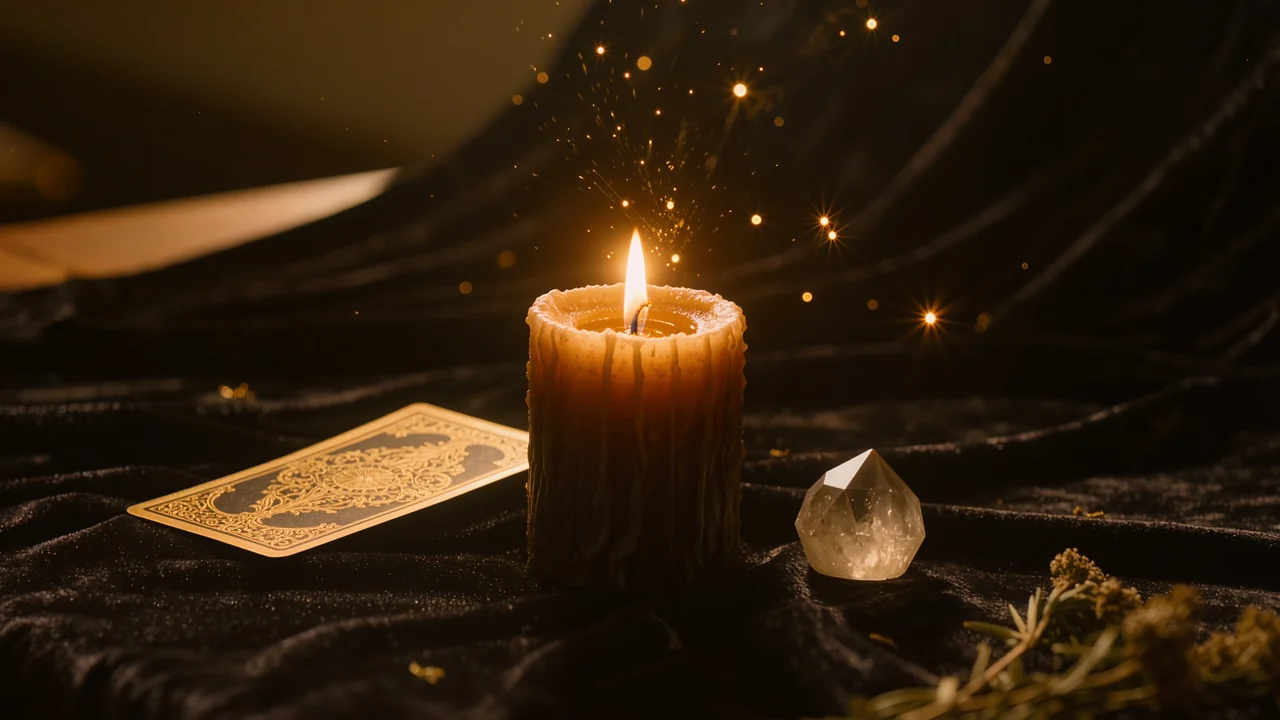
Candle Flame Crackling Spiritual Meaning: What It Means
A crackling flame usually comes from the wick, wax, moisture, or a small draught, while the candle flame crackling spiritual meaning may offer a gentle prompt to pause and notice your feelings. Treat the sound as an observation rather than a fixed message, and check the candle’s everyday causes before giving it symbolic weight.
This guidance is for anyone seeking calm clarity around love, signs, energy, change, or a recent ending. You can learn to tell crackling from popping and flickering, inspect the wick, trim it to about 5 mm, and move the candle away from a draught. A simple journal entry with the time, flame behaviour, mood, and question you held can help you notice patterns without forcing an answer.
In short
- A crackling flame is usually moisture or debris in the wick, so check the physical cause first.
- Spiritually, crackling is often read as a message arriving, a presence near you, or energy releasing.
- The direction and rhythm of the crackle matter more than the sound alone.
- A short grounding ritual after the crackle helps you receive the message without fear.
What Does a Crackling Candle Flame Mean Spiritually?
A crackling candle flame is often read spiritually as a message, a sensed presence, or energy moving through a release. In everyday terms, the sound usually comes from moisture in the wick, tiny air pockets in the wax, or a nearby draught. The spiritual interpretation can offer a reflective way to consider what the moment brings up for you, without treating the sound as proof of anything unseen.
Begin with the physical details. A wick that has absorbed humidity may hiss or pop as the water warms. Natural wax can hold small pockets of air, and fragrance oils may create brief sounds as they heat. An open window, heater, fan, or passing movement can make the flame lean and flutter at the same time. Trim the wick to about 5 millimetres, move the candle away from airflow, and watch whether the sound settles during the next few minutes.
If the crackle continues after these simple checks, you may choose to give it personal meaning. Some people associate repeated sounds with a message needing attention, emotional energy shifting, or a feeling of presence during prayer or meditation. Let your own mood, intention, and the timing of the sound guide your reflection. A crackling flame is not automatically a warning or a bad omen. You can record what happened, pause for a calm breath, and return to the question or feeling that brought you to the candle. This gentle approach also fits with noticing mirror hours and universal signs without forcing a fixed interpretation.

Crackling vs Popping vs Flickering: How to Tell Them Apart
A crackling flame makes small, repeated pops, a popping flame gives a sudden sharper burst, and a flickering flame changes shape or direction without necessarily making a sound. Separating these signs helps you check the candle itself before assigning spiritual meaning. A quiet observation can then offer a gentle reflection, rather than a fixed prediction.
| What you notice | Likely everyday cause | Common spiritual reading |
|---|---|---|
| Crackling: steady, small pops like tiny sparks | Moisture in the wax or wick, a wooden wick settling, or uneven burning | Some readers take the repeated sound as a sign of active thoughts, emotional movement, or a message asking for attention. |
| Popping: one sudden, louder burst | Water trapped in the wick or wax heating quickly around a small air pocket | It may feel like a moment of emphasis, inviting you to pause and notice what you were thinking at that exact instant. |
| Flickering: the flame dances, leans, or grows and shrinks | A draught, nearby movement, a long wick, or changing air around the candle | In spiritual practice, this movement can be read as shifting energy or an unsettled focus. Some people pair this observation with crystal ball reading and scrying for a more reflective practice. |
Why Is My Candle Flame Flickering or Popping? The Everyday Causes
Before giving a crackling flame a spiritual meaning, rule out the simple causes that can make a candle flicker, snap, or pop.
- A draught from an open window, fan, air conditioner, or doorway can disturb the flame, so move the candle to a still surface and watch it for 30 seconds.
- A wick that is too long, bent, or uneven may create a large, dancing flame; extinguish the candle, let the wax cool, trim the wick to about 5 millimetres, and relight it briefly.
- Moisture trapped in the wick or wax can produce small pops because water turns to steam when heated, so place the candle somewhere dry and see whether the sound settles after a minute.
- Essential oil, fragrance, herbs, crystals, or other additions in the wax can change how it burns and may cause brief crackling, so check the surface for visible materials before lighting it again.
- A candle near the end of its life can burn unevenly as the wick reaches the container base or the remaining wax becomes shallow, so extinguish it if the flame grows tall, smokes, or heats the vessel.
- To test the room itself, light an ordinary unscented candle in the same spot for under a minute; if only one candle reacts, its wick or wax is the likelier cause.
Reading the Rhythm: What the Crackle Is Saying
A crackling flame can be read as a gentle prompt to notice the quality, timing, and direction of the moment, rather than as a fixed prediction. First, make sure the candle is safely placed and burning evenly. Then listen to the rhythm. A slow, steady crackle may feel like reassurance, quiet company, or a soft sense of presence. If the flame leans towards you while the sound remains calm, you might take that as an invitation to receive comfort and stay with your intention.
Fast, repeated crackling can symbolically suggest energy releasing or a message pressing through your awareness. It may appear when emotions are active, when you are making a decision, or when a subject needs your attention. If the sound begins as you speak someone’s name or ask a clear question, record the timing as a possible direct response. Hold it lightly, especially if the wick has been damp or the wax is uneven. The spiritual meaning of candle sounds becomes clearer through repeated observation than through one dramatic moment.
Notice what happens when you pause. A crackle that stops as you become quiet may feel like an invitation to listen inwardly before forming another question. A flame that bends away, steadies, or grows brighter can add context, though these movements also have ordinary causes such as air currents. Write down the exact time, your words, the rhythm, the direction of the flame, and your first bodily or emotional impression. Give yourself a few minutes before interpreting it. If the moment continues to feel meaningful, you could pair these notes with an automatic writing reading for channeled messages, using the flame as a starting point rather than proof.

A Simple Ritual to Respond to a Crackling Flame
Pause and breathe
Respond to a crackling flame by slowing the moment down. Sit comfortably, keep both feet on the floor, and take three steady breaths. Let each breath last a little longer than the one before it.
Give yourself a few seconds before assigning meaning to the sound. A calm body makes it easier to notice what you feel and what is actually happening with the wick and wax.
Speak your question
Say your question, intention, or the person’s name out loud once. Use simple words, such as, “What do I need to understand about this connection?” Keep the question open and gentle.
You may prefer to ask for clarity around a feeling rather than a prediction. The flame can serve as a focus for reflection while you remain the person making choices.
Notice the change
Watch for one minute and observe whether the crackle becomes softer, louder, or stays the same. Notice the flame’s height, the wick’s movement, and any draught in the room.
Let the change be an observation rather than a fixed message. You can record this alongside a personalised Shadow Work Tarot Reading if you want deeper support for recurring emotional patterns.
Write one sentence
Write one clear sentence in your journal: “When the candle crackled, I felt…” or “The thought that came up was…” This keeps the experience connected to your inner response instead of a long list of possible signs.
Close with gratitude
Thank the candle, your own attention, or the quiet space you created. Extinguish the flame safely and leave the question alone for now. Gratitude gives the ritual a calm ending, allowing insight to unfold without fear or pressure.
When the Crackle Feels Like More Than a Sign
If the crackle keeps returning after you have checked the wick, wax, and candle holder, pause and consider what it brings up in you. Repeated signs can appear when you are ready to look more closely at a feeling, choice, or relationship pattern. Their meaning remains personal, so treat the sound as an invitation to reflect rather than proof of a warning or prediction.
A personalised tarot reading can help put words to that pattern and show the themes surrounding your situation. It may offer perspective on your emotions, boundaries, or next step while leaving room for your own judgement. A reading names possibilities and patterns; it cannot promise a fixed future.
Before booking, write one clear question in a single sentence, such as, “What am I overlooking in this connection?” Add two or three lines about what happened, how the flame behaved, and what you felt in that moment. This gives the reader something grounded to work with and helps you notice which part of the guidance feels relevant. SortiSpells offers a free first consultation with the code WELCOME, including intuitive guidance and future insights for those seeking a wider view.
Keeping a Candle Journal for Signs
A simple candle journal can help you trust your own intuition by showing how a flame’s sounds relate to your thoughts and feelings over time.
- Write the date, time, candle type, and what you noticed, such as a steady crackle, a single pop, or repeated flickering.
- Record the question you were holding before lighting the candle, using your own words rather than trying to make it sound spiritual.
- Describe your immediate feeling in a few honest words, such as calm, tense, hopeful, distracted, or relieved.
- Add ordinary details that may affect the flame, including an open window, a damp wick, a new candle, or movement nearby.
- After a few weeks, read the entries together and look for patterns in timing, sound, mood, and the subjects you were considering.
- Patterns can offer a personal point of reflection, especially when the same feeling appears before similar choices or conversations.
- Before a tarot or spiritual reading, revisit two or three recent notes so you can share clear observations rather than relying on one striking moment.
- You can also compare your notes with mirror hours and other universal signs while keeping your own experience at the centre.
My picks



When a candle flame crackles, first check the wick for moisture, soot, or a loose piece of debris before giving the sound a spiritual meaning. Then pause, place both feet on the floor, and take three slow breaths while noticing whether the rhythm or direction changes. You may treat the moment as a gentle prompt, rather than a certainty, and record what you felt. For further reflection, browse my Tarot Readings.
Want a clearer read on the sign you keep seeing?
Bring your question to a personalised reading and let the cards help you name what the flame is pointing to. Your first consultation is free with the code WELCOME.
View Tarot ReadingsFrequently asked questions
Is a crackling candle flame a bad sign?
No, a crackling flame is usually read as a message or nearby presence rather than a warning. Check the practical causes first: a damp or uneven wick, loose debris, candle additives, or a draught. If the candle is safe to keep burning, sit quietly for a minute and notice what you were thinking or feeling when the sound began.
What does it mean when the candle flame pops loudly?
A loud pop often comes from moisture or small debris trapped in the wick, so inspect the candle before giving it spiritual meaning. In some traditions, a sudden pop is read as a message arriving quickly. Pause, breathe, and write down the first thought that comes to you. Extinguish the candle if the flame grows too high.
Why does my candle flame flicker when I ask a question?
Air movement is the usual cause of flickering, especially near a window, vent, fan, or moving sleeve. When the change happens right as you speak, many candle readers treat it as a symbolic response. Ask once, then watch for a few seconds without leaning toward the flame. Record the timing and check the room before drawing meaning from it.
Should I put the candle out if it keeps crackling?
Trim the wick to about 5 millimetres, remove visible debris, and move the candle away from draughts before relighting it. If it still crackles, listen to the rhythm for a short while and note what you feel. Put it out if the flame becomes tall, smoky, unstable, or reaches the container’s edge. Safety comes before interpretation.
Can a crackling flame mean a spirit is near?
Some traditions interpret a crackling flame as a sign that a spirit or presence is near, while ordinary candle behaviour remains a common explanation. Stay calm, say a name or gentle question, and notice whether the sound changes. Keep the exchange simple, then thank the space and extinguish the candle safely when you are finished.
Tarot readings and spiritual guidance are offered for personal reflection and entertainment. They do not replace medical, legal or financial advice.
Related readings

Aura Cleansing with Energy Reading and Spiritual Protection
Money Spell and Abundance Ritual for Financial Luck

Career Psychic Reading with In-Depth Tarot Guidance

Cord Cutting Ritual to Remove Toxic Attachments

Crystal Ball Reading and Scrying

Financial Astrology and Wealth Reading