


Celtic Cross Tarot Spread: How to Read It
To master the Celtic Cross tarot spread how to read it with clarity, you simply need to connect the cards in small pairings rather than analysing ten separate definitions at once. Looking at the direct tension between your central challenge and your subconscious foundation brings immediate direction when personal emotions cloud your sight.
This approach speaks to anyone sitting with their deck over relationship worries or career crossroads who feels overwhelmed by conflicting symbols. You will identify how cards talk to one another across the layout, quiet self-doubt while interpreting your spread, and leave your table with a grounded perspective instead of confusion.
In short
- The Celtic Cross is a 10-card spread that tells a story. Start by getting the overall feel before diving into details.
- Positions 1 and 2 show the core situation; 3 and 4 reveal root causes and past influences; 5 and 6 highlight conscious goals and near future; 7 and 8 reflect your inner state and environment; 9 and 10 offer guidance and likely outcome.
- Look for patterns: repeated suits, numbers, or major arcana cards that amplify the message.
- If reading for yourself feels confusing, a professional tarot reading can provide an unbiased perspective and actionable guidance.
What Is the Celtic Cross Tarot Spread?
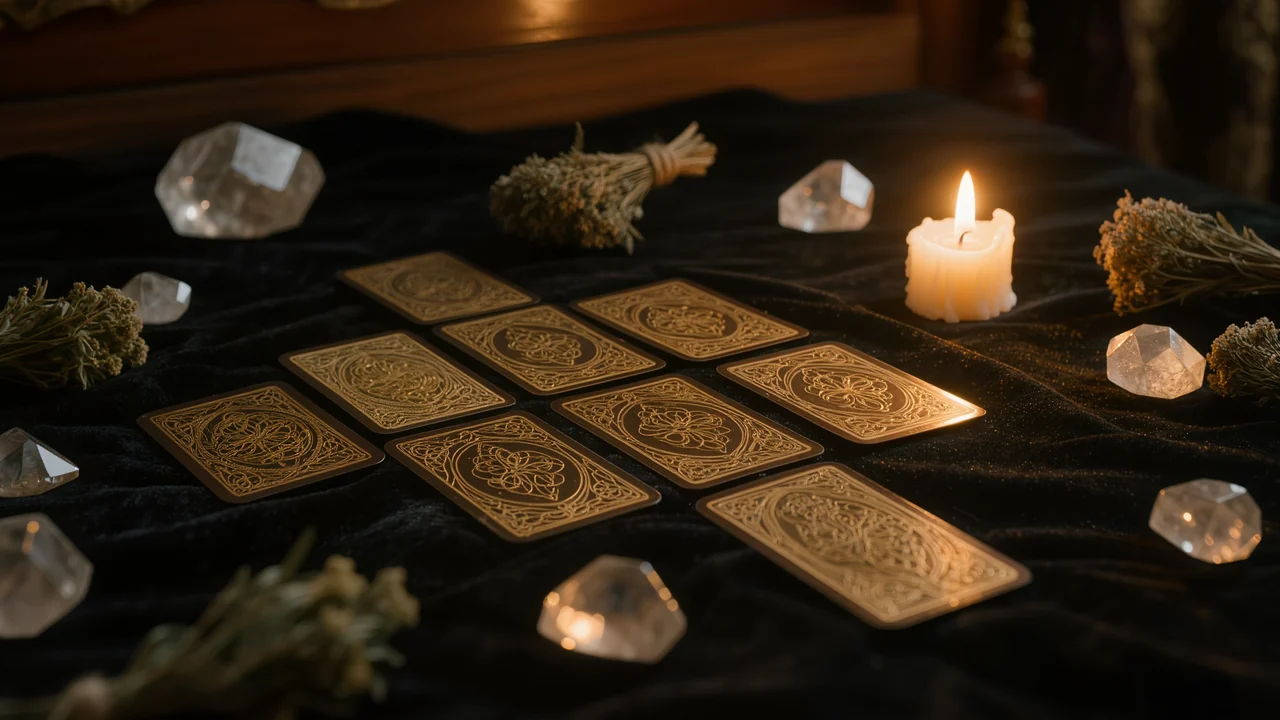
The Celtic Cross tarot spread is a classic ten-card layout designed to map out the moving parts of a situation in depth. Rather than offering a quick yes-or-no answer, it gathers past influences, hidden obstacles, conscious hopes, and outside energies into a single visual landscape. Despite the folk name, the layout was popularised by Arthur Edward Waite in 1910 as a practical framework for looking at how different forces interact within a person's life.
I often turn to this spread when a smaller three-card draw leaves too many threads untangled. It works best during major crossroads, lingering emotional confusion, or complex decisions where understanding the root cause matters just as much as the outcome. Ten cards introduce multiple layers, so the practice asks you to step back and observe how each card speaks to the others across the table.
The 10 Positions and What They Mean
The ten positions work as a connected map: begin with the centre of the matter, then follow the influences around it to see how the situation may be unfolding.
- Position 1 shows the present situation and the core issue, so it sets the subject for the whole Celtic Cross and gives the other cards a frame.
- Position 2 represents the challenge or crossing influence, revealing what supports, blocks, complicates, or tests the energy shown in Position 1.
- Position 3 points to the foundation of the matter, including a subconscious belief, an earlier choice, or an emotional root that may be shaping the present.
- Position 4 reflects the recent past and what is beginning to pass, helping you see which experience or pattern has led into the current situation.
- Position 5 describes the conscious goal, ideal, or desired direction, and its relationship with Position 1 can show whether your hopes match your present circumstances.
- Position 6 indicates the near future and the next influence likely to enter the situation, giving you a practical sense of what may need attention soon.
- Position 7 reflects your inner state and how you see yourself, so it can reveal your emotional stance, personal power, uncertainty, or readiness to act.
- Position 8 represents the external environment, including another person’s influence, family dynamics, workplace conditions, or the atmosphere surrounding your choices.
- Position 9 gathers your hopes and fears, showing where desire and apprehension may overlap and colour the way you interpret the rest of the spread.
- Position 10 presents the likely outcome or the guidance available if the current pattern continues, so read it as a direction to consider rather than a fixed prediction.
How to Read the Cards as a Story (Not Just Meanings)
Begin with the central cross
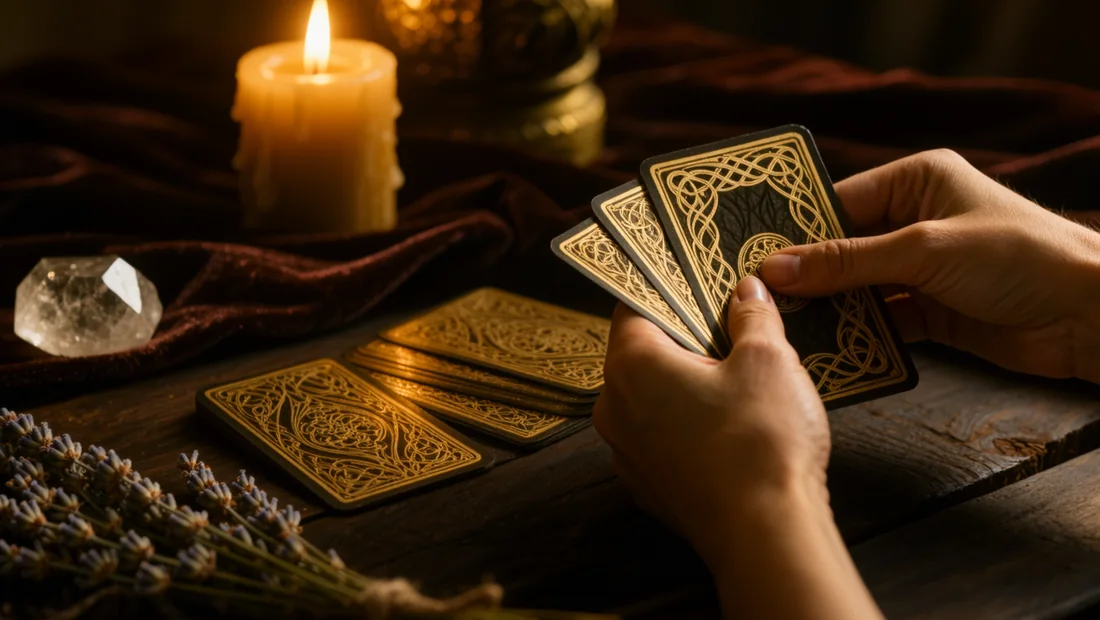
Read the Celtic Cross as a conversation between cards, beginning with positions 1 to 6. Position 1 shows the present situation, while position 2 describes the force crossing it. Together, they reveal the central tension rather than two separate meanings.
Then connect position 3, the foundation, with position 4, the recent past. Ask what has been developing beneath the surface and what has shaped the current moment. Positions 5 and 6 show the conscious aim and the approaching influence, helping the story move from background into possibility.
Pair the cards deliberately
Read positions 1 and 2 as the main pressure point. Compare 3 and 4 to see how roots and past events interact, then place 5 and 6 beside each other to understand intention versus near-term movement. A supportive card beside a difficult one may show a resource meeting a challenge, rather than a contradiction.
Spot repeated patterns
Scan the full spread for repeated suits, numbers, and Major Arcana cards. Several Swords can point towards mental activity, decisions, or difficult conversations; many Cups may place feelings and relationships at the centre. Wands often bring drive and change, while Pentacles draw attention to practical life, time, work, or security.
Notice the elemental balance as well. A spread filled with one suit may show where energy is concentrated, while a missing suit can suggest an area needing conscious attention.
Follow the staff
Read positions 7 to 10 as a developing path. Position 7 reflects your attitude or inner stance, position 8 the surrounding environment, position 9 hopes and fears, and position 10 the likely direction if the present pattern continues. Treat this final card as guidance, not a fixed outcome.
Tell the story aloud
Summarise the spread in a few sentences: what is happening now, what is influencing it, and what response may serve you best. If emotions cloud your view, write the cards down and revisit them after a few hours. The clearest message often comes from the relationships between cards, rather than from any single definition.
Common Mistakes and How to Avoid Them
A ten-card layout often feels overwhelming when you try to grasp every symbol at once, leading to a few common missteps that cloud the reading.
- Looking at cards as isolated pieces strips away the conversation between them, because each image takes its tone from the cards sitting beside it.
- Treating this layout as a prediction tool for yes-or-no questions flattens the spread, which exists to illuminate complex underlying patterns and motives.
- Overlooking the second card, the cross card, deprives you of the central friction that gives the entire story its momentum and purpose.
- Reading for yourself during an emotional breakup often causes you to project your personal fears directly onto the imagery, mistaking sharp anxiety for true intuition.
- Trying to force a difficult card into an artificial happy ending hides the guidance you need, as the spread reflects current energies and open possibilities.
When to Seek a Professional Reading
Reading a ten-card layout for yourself often blurs the line between what the cards show and what your heart secretly hopes to see. When strong emotions surround a question, your mind tends to pick out the symbols that comfort you while glossing over the harder truths in the challenge or root positions. Sitting with someone who has no personal stake in the outcome brings calm, neutral eyes to the spread. An outside reader notices the subtle tensions between the positions without second-guessing every difficult card.
In my practice, I look at these overlapping card dynamics to help you find quiet patterns and practical, grounded steps you can take right away. I write every personalised session by hand and deliver it as a detailed PDF sent straight to your email, where it also stays saved in your private account space so you can return to it as things unfold. If you find yourself pacing in circles around a heavy choice, my Crossroads Tarot Reading for Decision Making helps untangle the path ahead, and you can receive your first consultation free by entering the code WELCOME at checkout.
A Simple Ritual to Prepare for Your Celtic Cross Reading
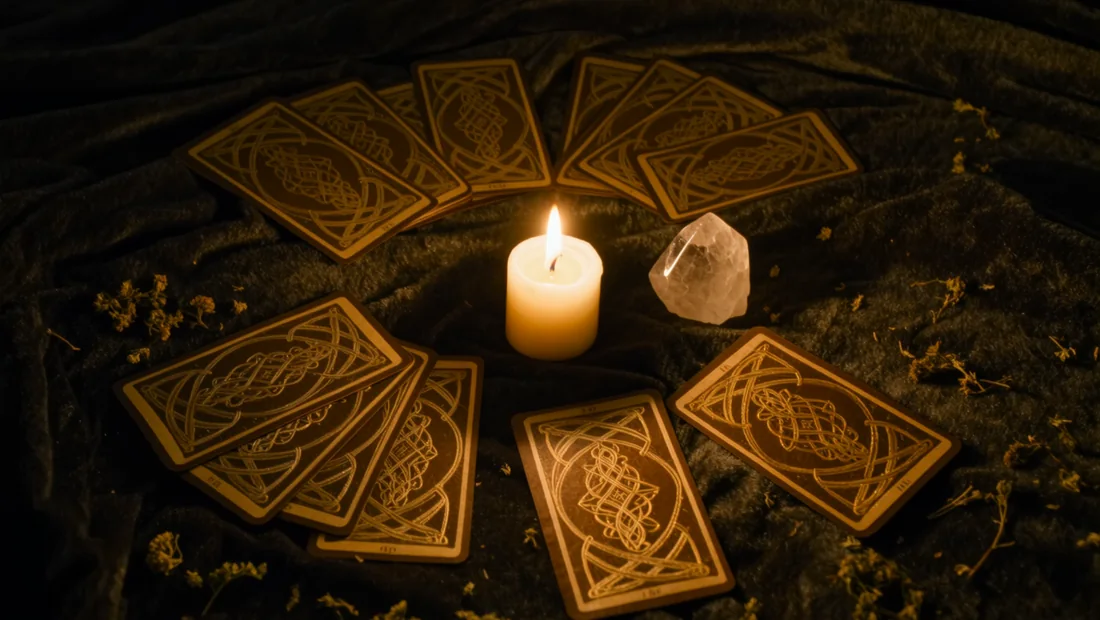
A short grounding ritual can help you approach a Celtic Cross reading with steadier attention and a clearer question.
Clear the space
Open a window, light incense safely, or ring a bell for a few moments. You can also use a gentle sound recording or browse my spells and energy cleansing practices for another simple option.
Ground your body
Place both feet on the floor and take five slow breaths. Feel the chair beneath you, relax your shoulders, and let your breathing settle into a natural rhythm.
Set your intention
Write one clear question in a sentence, such as, “What can I understand about my next step in this relationship?” Keep the wording open enough to invite insight rather than a fixed answer.
Shuffle with focus
Hold the question gently while you shuffle. When your hands feel ready, stop and cut the deck in the way that feels natural to you.
Lay the cards calmly
Place each card in its position without rushing to interpret it. Notice your first impression, including images, colours, and bodily sensations, then record it before checking traditional meanings. A small protection talisman can serve as a quiet reminder to keep your reading centred.
My picks
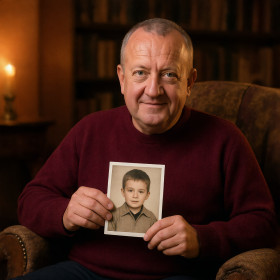

Before deciphering individual positions, step back from your ten cards for a full minute to notice dominant suits or repeating numbers across the cloth. This quiet pause gives the story its foundation before you unpack each card. If interpreting your own layout feels clouded, I am always happy to offer an outside perspective through my tarot readings, delivered directly to your email.
Want a Clearer Answer?
If the cards feel tangled, let me read them for you. I'll lay out a personalised Celtic Cross and send you a detailed PDF with insights and guidance, delivered straight to your inbox. Your first reading is on me with code WELCOME.
View Tarot ReadingsFrequently asked questions
Do I need to be psychic to read the Celtic Cross?
Anyone can read this layout without psychic gifts. The ten positions provide a clear architecture that guides your interpretation step by step. When I lay these cards out on my wooden table, I rely on visual associations, everyday symbols, and quiet attention rather than supernatural insight. Regular practice and an open mind will carry you through naturally.
Can I use the Celtic Cross for yes/no questions?
This layout is designed for complex, open-ended situations rather than a simple binary answer. If you seek a quick yes or no, a single card pull or a pendulum works much better. Ten cards reveal underlying tensions, fears, and environmental influences. Asking a binary question here often muddles the message instead of offering the gentle clarity you need.
What if the cards seem contradictory?
Contradictory cards reflect the natural ambivalence within your daily life or inner thoughts. When I notice opposing energies on the cloth, such as an active wand next to a passive cup, I look for where hesitation lives. Treat the clash as an honest mirror of mixed emotions rather than an error in your interpretation. Look at the surrounding elements to ground the theme.
How often should I do a Celtic Cross reading?
Give your situation a few weeks or months to evolve before laying out the cards again. Repeating the spread too frequently tends to stir confusion because life circumstances take time to shift. I usually recommend pausing until a genuine shift occurs, a major decision arrives, or fresh details change your perspective on the matter at hand.
Can I read the Celtic Cross for someone else?
You can certainly read for others as long as you have their clear consent. Holding space for a friend requires setting aside your personal assumptions so the cards can speak honestly. When I read for someone in my quiet workspace, I focus on offering an objective perspective, letting their own reactions guide the conversation while respecting their boundaries.
Tarot readings and spiritual guidance are offered for personal reflection and entertainment. They do not replace medical, legal or financial advice.
Related posts
 Three of Wands in Tarot: Meaning, Love & Reversed
 Wheel of Fortune Reversed: Meaning & Guidance
 What Does the Death Card Mean in Tarot? A Gentle Guide