


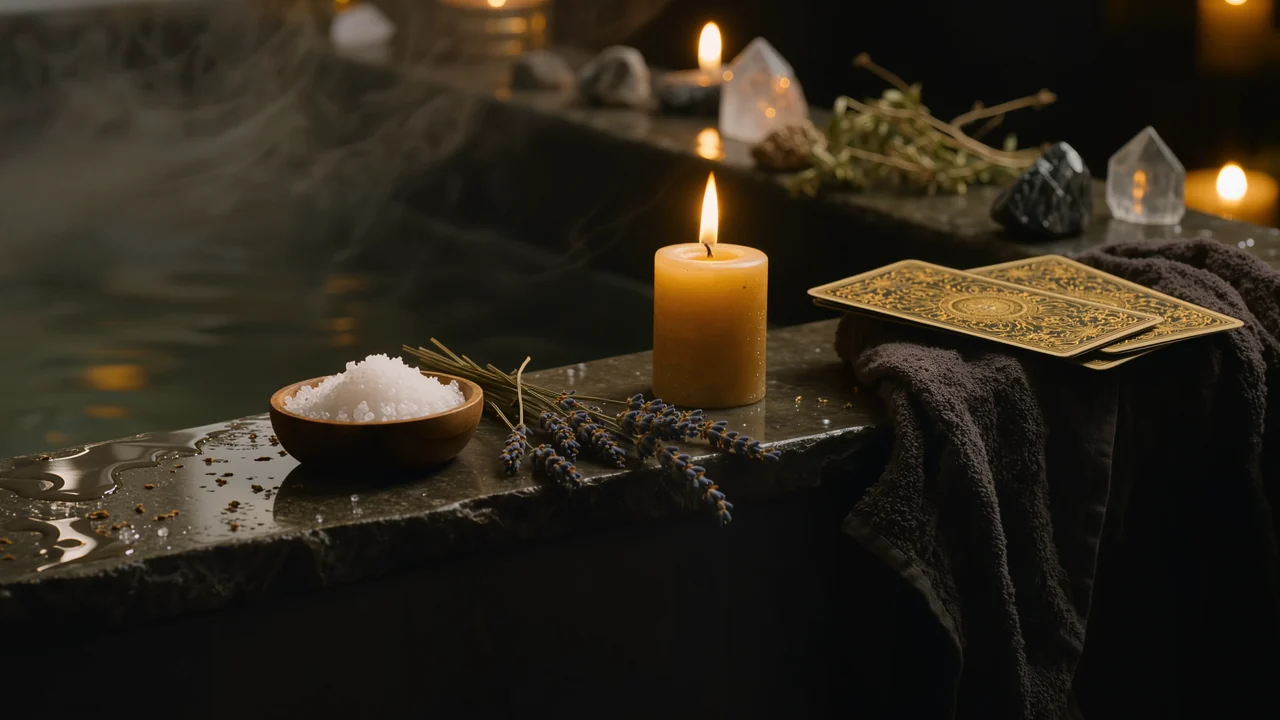
Salt Bath Energy Cleanse: How to Do It Right
If you feel heavy after a difficult week, breakup, crowded event, or tense conversation, a salt bath energy cleanse can give you a quiet, grounding pause. Its value may come through warm water, deliberate breathing, and the clear boundary you create around your time, so treat it as a personal ritual rather than proof that energy has been removed.
For anyone seeking gentle support after emotional overload, especially when thoughts keep circling, the guidance below covers how to choose salt, prepare the bath safely, set a simple intention, and recognise what feels different afterwards. You will also find practical ways to use salt around crystals or a room, notice when deeper emotional care may be needed, and build a small weekly rhythm with one additional calming practice.
In short
- A salt bath is a simple, low-cost ritual: warm water, a full cup or two of salt, 20 minutes, and a clear intention.
- Salt does not 'detox' your body through your skin. Its real value is the pause, the warmth, and the symbolic act of release.
- The ritual works best when you name what you are letting go of before you get in, and rest afterward instead of rushing back to your day.
- If the heaviness keeps returning, a personalized reading can help you see the pattern behind it. Salt clears the surface, insight names the source.
What a Salt Bath Energy Cleanse Actually Does
A salt bath energy cleanse can help you feel refreshed through warmth, stillness, and a clear personal intention, while its spiritual meaning remains symbolic rather than medically proven. Warm water can soften the skin and ease ordinary muscle tension. If you use Epsom salt, its magnesium content may contribute to a relaxing bath, although the body does not use the water as a route for removing toxins. Salt does not draw hidden impurities out through your skin.
Salt bathing belongs to a long tradition of folk and spiritual practices found in many cultures. People have used water and salt after illness, grief, travel, conflict, or contact with crowded places. The gesture creates a simple boundary around a difficult moment. Water represents movement and release. Salt is often associated with preservation, purification, and protection. Your intention gives those familiar materials a personal meaning, such as leaving an argument behind or making space after a breakup.
The ritual can still feel helpful without a scientific mechanism behind the spiritual interpretation. Setting aside ten or fifteen quiet minutes, lowering the lights, and giving one task your full attention can interrupt the cycle of replaying thoughts. The warmth may help your body settle, and the repeated actions give your mind a beginning and an ending. You might say, “I release what I am ready to set down today,” while rinsing your hands or stirring the water. Treat that sentence as an invitation for reflection, rather than a promise that every heavy feeling will disappear.
If the same emotion returns after bathing, it may be asking for understanding alongside rest. A cleansing practice can mark a boundary, while a personalised energy cleansing reading may offer a gentler way to reflect on what the feeling is connected to. Keep the ritual grounded: let the bath support your attention, comfort, and sense of choice.

Which Salt to Use (and What You Already Have at Home)
You can use the salt already in your cupboard, so this ritual does not require a special purchase or a rare type of mineral.
- Epsom salt is usually the easiest and most affordable choice, especially when your body feels tense after a long week; it is commonly used in baths for muscle relaxation and dissolves quickly in warm water.
- Himalayan or pink salt works well for ritual use and gives the water a soft colour, though it has no special energetic advantage over ordinary salt.
- Sea salt is a traditional option for cleansing baths, and coarse grains can make the preparation feel more deliberate; use roughly one to two cups for a full bath.
- Coarse kosher salt can be used in the same way as sea salt, provided it dissolves comfortably in the water and the grains do not scratch your skin.
- Table salt is suitable when that is all you have, although fine iodised salt can feel less pleasant on the skin and may leave a stronger salty residue around the tub.
- A small handful of dried lavender or rosemary can add scent and symbolism, so place the herbs in a muslin bag or thin cloth to make cleaning easier.
- For essential oils, dilute a few drops properly in a carrier oil before stirring the mixture into the bath salt, and skip them if your skin is sensitive to fragrance.
- Choose plain, unscented salt when you feel overwhelmed, since a simple bath gives you fewer smells and sensations to process while you settle.
How to Take a Salt Bath for Energy Cleansing: Step by Step
You can make a salt bath energy cleanse simple, quiet, and easy to repeat: prepare the space, name what you are releasing, soak without distraction, then give yourself time to settle.
1. Choose your moment
Take the bath in the evening, after the day is finished and you can move straight towards rest. Allow around 45 minutes from preparation to the end of your quiet time.
Switch off notifications and choose a night when you will not need to rush into cooking or cleaning afterwards.
2. Clean the tub first
Rinse away hair, oils, and any residue before you begin. Wipe the surface with your usual bathroom cleaner, then rinse it well so the water feels fresh.
A cleansing ritual can feel unsettled when the physical space is dirty, so give the bath a clean starting point.
3. Fill the bath and add salt
Run a warm bath that feels comfortable on your skin. Avoid very hot or scalding water, especially if you tend to feel light-headed or overheated.
Add one to two cups of salt while the tub fills, stirring the water with your hand so it dissolves. Use less salt for a smaller tub or a first attempt.
4. Name what you are releasing
Before stepping in, say one clear sentence aloud or write it on a small piece of paper. You might say, “I release the argument I keep replaying,” or “I release the heaviness I carried through today.”
Keep the wording specific and gentle. This gives your attention somewhere to rest during the soak.
5. Soak for twenty minutes
Set a quiet timer for 20 minutes and leave your phone outside the bathroom. Let your thoughts drift without trying to interpret every feeling.
Breathe slowly, keep the water comfortably warm, and notice the support of the water beneath your body. If you feel uncomfortable, step out early.
6. Let the water go
When you are ready, pull the plug and watch the water drain. Silently allow the sentence you chose to leave with it.
You can place one hand over your chest or stomach as a small reminder that the ritual has reached its end.
7. Rinse, dry, and drink
Take a quick cool shower to rinse away the salt, then pat your skin dry rather than rubbing vigorously. Put on clean, comfortable clothes.
Drink a glass of water before leaving the bathroom. Keep the transition slow and quiet.
8. Rest instead of tidying
Leave the tub until the next day if you can, and skip chores immediately after the bath. Sit quietly or go to bed for at least 20 minutes.
The pause afterwards helps you notice what feels different, whether that is calm, tiredness, emotion, or simply a clearer sense of the evening.

Common Mistakes That Make a Salt Bath Feel Like Nothing
If your salt bath felt like nothing, the ritual may have been rushed, under-dosed, or left without enough quiet afterwards for you to notice a change.
- Taking the bath while checking your phone, watching the clock, or mentally writing tomorrow’s to-do list keeps your attention in the day’s demands. Give yourself 15 to 20 unhurried minutes, silence notifications, and let the water be the only task for that time.
- A pinch of salt in a full tub is unlikely to feel like a deliberate cleansing practice. Use the amount recommended for your chosen salt, usually several handfuls or around one cup for a standard bath, and dissolve it fully before settling in.
- Skipping the intention can leave the ritual feeling vague. Before entering, name one thing you are ready to set down, such as the argument you keep replaying, tension from a crowded room, or the emotional pull of a recent breakup.
- Leaving the tub and immediately opening emails, answering a difficult message, or scrolling through upsetting news can fill your attention again. Dry off, drink some water, put on comfortable clothes, and keep the next 20 minutes free from demanding conversations.
- Expecting a dramatic overnight transformation can make a gentle shift easy to miss. Many people notice a quieter difference during the following day or two, such as steadier thoughts, easier sleep, or less urge to revisit the same moment.
- Repeating the ritual several times in one evening rarely adds clarity. One considered bath, followed by rest and a simple observation in your journal, gives you more useful information than several rushed attempts.
Salt for Crystals, Rooms, and Your Own Energy: What Carries Over
Salt works in three simple ways: around a room, with suitable crystals, and in your own bath. For crystals, dry salt burial or a short saltwater soak is generally suitable for hard stones such as clear quartz and amethyst. Place the stone in a glass or ceramic dish, cover it with dry salt for several hours, then brush it clean. For a soak, dissolve salt in lukewarm water and rinse the crystal afterwards. Check the stone first, because selenite, halite, malachite, and pyrite should never be soaked or buried in salt. They can soften, dissolve, tarnish, or become damaged. If you are unsure, use smoke, moonlight, sound, or a dry cloth instead. You can find more gentle ideas in these spells and energy cleansing practices.
For a room that feels tense after an argument or a crowded gathering, put a small bowl of dry salt in a quiet corner for two or three days. Let it sit undisturbed, then empty it into the rubbish and wash the bowl before using it again. Salt from the bowl carries the atmosphere you were trying to clear, so do not reuse it for cooking, bathing, or another space. This is a quiet reset rather than a test for hidden forces. You might open a window for ten minutes, tidy one surface, or say, “This room may feel peaceful and clear.” Those small actions give the ritual a visible beginning and end. For a more protective focus, you may also read about an evil eye protection ritual.
Your bath is the most direct version of the same idea: salt, water, and a clear intention brought together through your body. It can mark the moment you release the emotional residue of a difficult day. Salt cannot tell you why the same situation keeps repeating, who needs a boundary, or what step belongs next. When the heaviness returns, write down the feeling, the event that stirred it, and one choice within your control. A personal reading can offer a reflective way to name the pattern beneath the tiredness, while your own judgement remains central.
When a Salt Bath Isn't Enough: Naming What You're Actually Releasing
A salt bath can ease the feeling of heaviness, yet a returning weight may be asking for attention rather than another cleanse. Notice when it appears: after seeing the same person, every Sunday evening, whenever you consider a particular decision, or each time an old conversation comes back to you. A passing mood often shifts with rest and time; a repeating pattern has a recognisable doorway. Writing down the moment it begins can reveal whether the bath is helping you release temporary tension or touching something that needs a clearer name.
The bath works with the surface of your experience: your body slows down, your attention comes back to the present, and you create a deliberate ending to a difficult moment. A personalised reading can look at the thread beneath that feeling, such as a relationship dynamic, an emotional cycle, or the choice you keep circling without settling. At SortiSpells, you send one question and receive a written PDF reading by email, so you can take it in privately and return to the words when you feel ready. You might begin with a personalised shadow work tarot reading when the same emotional pattern keeps returning, or choose a tarot reading for a focused question.
The first consultation is free with the code WELCOME, offering a gentle way to see whether this style of guidance feels useful to you. A reading is an illumination, not a fixed verdict: it may help you recognise what has been influencing your mood, where your attention is caught, and which question deserves care. You remain the person who chooses what to do next. Before booking, you could take your next bath quietly, then write one sentence beginning, “What I keep carrying is…” Sometimes that honest sentence gives the reading a more precise doorway.
A Simple Weekly Rhythm: Salt Bath Plus One Small Practice
One salt bath a week is enough to give this practice a steady shape; taking more baths will not necessarily deepen the effect and may leave your skin dry or irritated. Choose one evening when you can be unhurried, complete the bath as described earlier, and treat the ending as part of the ritual. Rinse if your skin feels tight, drink some water, and let the night stay quiet for a little while.
The following morning, take five minutes with a notebook. Write two simple lines: “What feels lighter?” and “What still feels stuck?” Add one concrete detail beneath each, such as sleeping more easily, replaying a conversation, or feeling less tense when you think about a particular person. This keeps the practice connected to your lived experience rather than asking the salt to explain everything for you.
If tarot or oracle cards are part of your spiritual routine, draw one card after the bath and record the date, the card, and your first impression. Avoid pulling several cards to force a clearer answer. A single image can give you a gentle theme to carry into the next day. Over several weeks, you may begin to notice recurring symbols, situations, or emotions. After a month, read the notes together and look for what the heaviness seems attached to: grief, overextension, a boundary, an unfinished conversation, or a need for rest.
When the pattern feels difficult to name alone, a personalised intuitive tarot reading with oracle cards can offer another reflective lens. It cannot decide what you should do, yet it may help you put words around what your weekly practice has already been showing you.
My picks



The most useful step is to name what you are ready to release before entering the bath. Add one or two cups of salt to warm water, sit for about 20 minutes, then rest quietly instead of rushing back into your day. The value lies in warmth, pause, and intention. If the heaviness returns, you may enjoy a personalized aura reading session for confidence guidance and Venus energy insights.
Salt clears the surface. A reading names the source.
If the same heaviness keeps coming back after every bath, it usually has a name, a person, a pattern, a decision you keep circling. Send your question and receive a personalized PDF reading by email. Your first consultation is free with the code WELCOME.
View Personalized Aura Reading Session, ConfiFrequently asked questions
How often should I take a salt bath for energy cleansing?
Once a week suits most people, and a second bath can make sense after a particularly draining event. Daily soaks may leave your skin dry or irritated. After a difficult meeting or crowded day, set aside 20 to 30 minutes, dim the lights, and let the bath mark a clear pause before returning to your routine.
How much salt do I put in the bath?
Use one to two cups of Epsom salt, sea salt, or Himalayan salt for a full bathtub. A small pinch will have little effect on the water’s texture. Stir until dissolved, then check that the bath feels noticeably soft and slightly salty. Start with one cup if your skin is sensitive.
Can I use table salt if that's all I have?
Yes, table salt can serve for a one-time bath when that is what you have available. Fine iodized grains may feel less comfortable on the skin and dissolve quickly. Coarse sea salt or Epsom salt is a pleasant option to keep at home. Rinse your body afterward and moisturize if your skin feels tight.
Does a salt bath really remove negative energy?
A bath cannot remove energy in a measurable physical way. It can create a warm, quiet pause that changes how you feel and helps you set down a stressful moment. Try naming what you are releasing as the water drains, then take three slow breaths before drying off.
Can I salt cleanse my crystals in the bathwater?
Use the bathwater only for hard stones such as quartz, amethyst, or black tourmaline. Keep selenite, halite, malachite, and pyrite completely away from water because they can dissolve, tarnish, or suffer surface damage. If you place a suitable crystal nearby, rinse and dry it afterwards, then check for chips.
What should I do right after the bath?
Rinse your body, dry off gently, put on clean clothes, and rest for at least twenty minutes. Keep your phone away during that pause, especially after an intense day. A glass of water, soft lighting, and a quiet room can help the calm settle before you return to messages or a difficult conversation.
Tarot readings and spiritual guidance are offered for personal reflection and entertainment. They do not replace medical, legal or financial advice.
Related readings

Aura Cleansing with Energy Reading and Spiritual Protection
Money Spell and Abundance Ritual for Financial Luck

Cord Cutting Ritual to Remove Toxic Attachments

Inner Child Healing Tarot Reading

Aura Reading with Venus Energy for Confidence
Related posts
 Full Moon Ritual for Release: A Simple Step-by-Step Guide
 Jealousy Energy Protection Ritual: A Gentle Guide
 Evil Eye Warning Signs: How to Recognise and Clear Them
 Cutting Toxic Cords: A Gentle Ritual to Reclaim Your Energy