


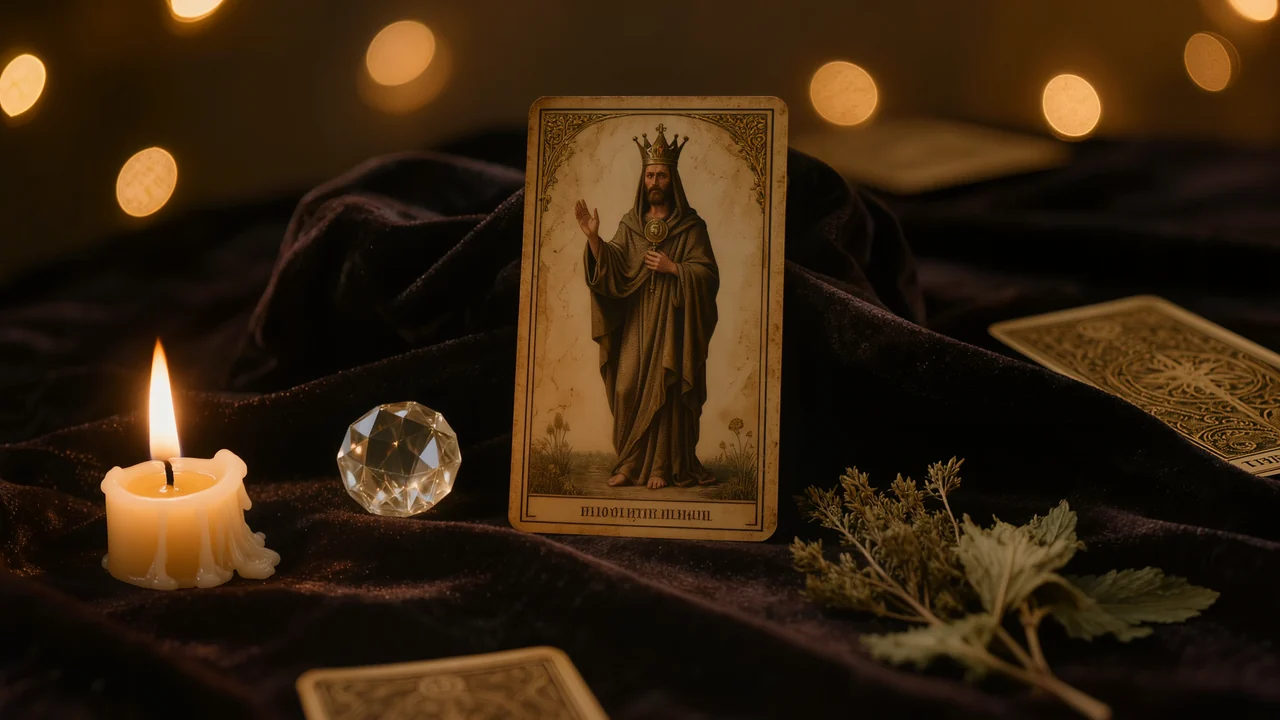
Hierophant Tarot Card Meaning: Tradition & Inner Guidance
The tarot hierophant card meaning often points to guidance, shared values, and the wisdom found in trusted traditions. It does not demand obedience: upright, it may invite learning or commitment; reversed, it can highlight rules, beliefs, or patterns that deserve a closer look.
Use it as a grounded way to read the card in love, work, or spiritual life, especially after a confusing pull. You can compare its upright and reversed messages, consider mentorship and commitment, and reflect on unconventional choices without fear. I also offer a simple ritual: light a candle for ten minutes, write one belief you inherited and one value you freely choose, then keep the page in your journal. A reading can offer perspective while your own judgement remains central.
In short
- The Hierophant represents tradition, belief systems, and the search for meaning, and it is not limited to institutional religion.
- Upright, it invites you to learn from mentors or commit to a spiritual practice; reversed, it asks you to question inherited rules.
- In love, it points to commitment and shared values, but also to defining your own relationship norms.
- A simple ritual (lighting a candle and journaling) can help you connect with your inner guidance.
What Does the Hierophant Tarot Card Mean?
The Hierophant tarot card meaning centres on tradition, shared beliefs, spiritual guidance, and the values you choose to live by. When this card appears, it may suggest learning from a teacher, community, family custom, or established practice while listening carefully to your own conscience.
Its Roman numeral V places it between the Emperor’s structure and the Lovers’ personal choice. That position gives the card a useful tension: guidance can offer stability, while your inner truth decides what deserves your commitment. The Hierophant may ask, “Which belief genuinely supports the person I am becoming?”
Religion and formal institutions can appear in its message, yet the card also speaks through everyday rituals, relationship agreements, cultural traditions, and lessons passed down by someone you respect. If you feel torn between keeping an old rule and following a quieter instinct, pause before choosing. Write down the tradition, the value beneath it, and whether that value still feels alive in your life.
The Hierophant Upright: When Tradition Becomes a Teacher
The upright Hierophant points towards tradition, learning, mentorship, and values that can give your next step a steady shape. Its message may appear when a familiar structure offers support: enrolling in a course, meeting a trusted teacher, joining a spiritual community, or returning to a family practice that still feels meaningful. The card invites you to receive wisdom thoughtfully and let commitment grow from shared principles.
You might notice this energy when you are seeking guidance from someone with experience, such as a mentor, counsellor, teacher, or elder. In relationships, it can encourage an honest conversation about shared values and the kind of commitment you both want. Along a spiritual path, it may suggest creating a regular practice, attending a group gathering, or studying a tradition that helps you listen more closely to your inner teacher.
Take a sheet of paper and write down one tradition you want to keep and one you want to question. For example, you may wish to keep a weekly family meal while questioning the belief that love must follow someone else’s timeline. Sit with both answers for five quiet minutes and notice which one brings steadiness, curiosity, or resistance. If the message still feels unclear, a personalised tarot reading or spirit guide reading can offer a reflective space for your own insight.
The Hierophant Reversed: When You Need to Break the Rules
The Hierophant reversed often points to a need for personal authority, careful questioning, and greater freedom in your beliefs. You may feel pressure to follow a family expectation, spiritual group, workplace rule, or relationship pattern that no longer fits. You may also feel ready to leave a dogmatic setting and choose an unorthodox path that feels more honest.
This card can describe rebellion, though its deeper invitation is discernment. Ask yourself who benefits from the rule you are following, what you genuinely believe, and what you fear might happen if you choose differently. A tradition may still hold wisdom when you select it consciously. Another may belong to an earlier version of your life. The reversed card gives you permission to pause before accepting advice, especially when an authority figure discourages questions or makes you doubt your own judgement.
Try a quiet release ritual in the evening. Place a candle on a stable, clear surface, light it safely, and say aloud one belief you are ready to release, such as “I must please everyone to be worthy.” Sit for five minutes and notice the feeling in your body as you name a belief you wish to keep. Write both sentences down, then choose one small action that reflects the second belief. If the pattern feels deeply rooted, a personalised shadow work tarot reading can offer a gentle space for reflection.

The Hierophant in Love: Commitment, Values, and Unconventional Paths
In love, the Hierophant often points to shared values, clear commitment, and a bond that feels meaningful within your chosen framework. Upright, it may reflect marriage, an engagement, meeting a partner’s family, or agreeing on the shape of a lasting relationship. The card invites you to ask whether your promises come from genuine conviction or from pressure to meet someone else’s expectations.
Its message can also support a relationship built outside conventional patterns. Reversed, the Hierophant may appear when social rules no longer describe your truth, perhaps as you consider an open relationship, a different approach to commitment, or a partnership shaped by spiritual and personal freedom. It can also mark the point where you leave a relationship whose habits, beliefs, or expectations conflict with your values. Honest conversation and explicit consent matter whenever you choose an unconventional path.
Write this prompt in your journal: Which values are non-negotiable for me in a partnership, and which expectations did I inherit from family, culture, or past relationships? Name three essentials, such as honesty, exclusivity, tenderness, independence, or shared faith, then describe how each one would look in daily life. A Love & Soulmate Reading can offer a reflective perspective on these themes, while my Single Love Reading may help you clarify what kind of connection fits your values.
The Hierophant at Work: Mentorship, Institutions, and Your Own Path
At work, the Hierophant often points to learning through guidance, established systems, and values you can respect. In an upright reading, it may reflect a mentor, professional training, or a workplace where clear roles help you grow. You might benefit from observing how an experienced colleague handles meetings, difficult decisions, or the customs of your field before choosing your own style.
The reversed card can describe feeling stifled by corporate culture, rigid policies, or expectations that leave little room for original thinking. It may support questioning an inherited career path and considering an unorthodox project, independent practice, or different kind of workplace. Give yourself time to separate useful structure from rules you follow purely through habit. A Crossroads Tarot Reading & Decision can offer a calm space for weighing those options.
For a practical step, choose one person you could ask for mentorship this month. Write down the skill you want to learn, then send a simple message requesting a short conversation or a specific piece of advice. Your own path can take shape through respectful listening and conscious choice. For broader guidance around work and money, see my Career, Finances & Work Psychic Reading.
How to Work with the Hierophant: A Simple Ritual for Inner Guidance
Use the Hierophant as a quiet mirror: a short ritual can help you notice which beliefs support your life and which ones deserve a closer look.
Choose a quiet moment
Set aside 10 to 15 minutes when your phone is silent and you will not be interrupted. Place a notebook, pen, and the card within reach.
Light a candle
Light one candle and take three slow breaths. Let the flame mark a pause between outside expectations and your own honest voice. Keep the candle on a stable, heat-safe surface.
Place the card
Set the Hierophant before you and look at its details for a minute. Ask, “What belief is shaping my life right now?” Write the first thoughts that arise without correcting them.
Write what feels true
Respond to these prompts: “What tradition feels nourishing?” and “What rule feels heavy?” Notice where your body relaxes or tightens as you write. You can later pair this reflection with gentle energy cleansing practices.
Close the ritual
Blow out the candle and name one small action to take within the next day, such as setting a boundary or asking for wise guidance. Record it beside your notes, then return to the card whenever you need a calm inner check-in.
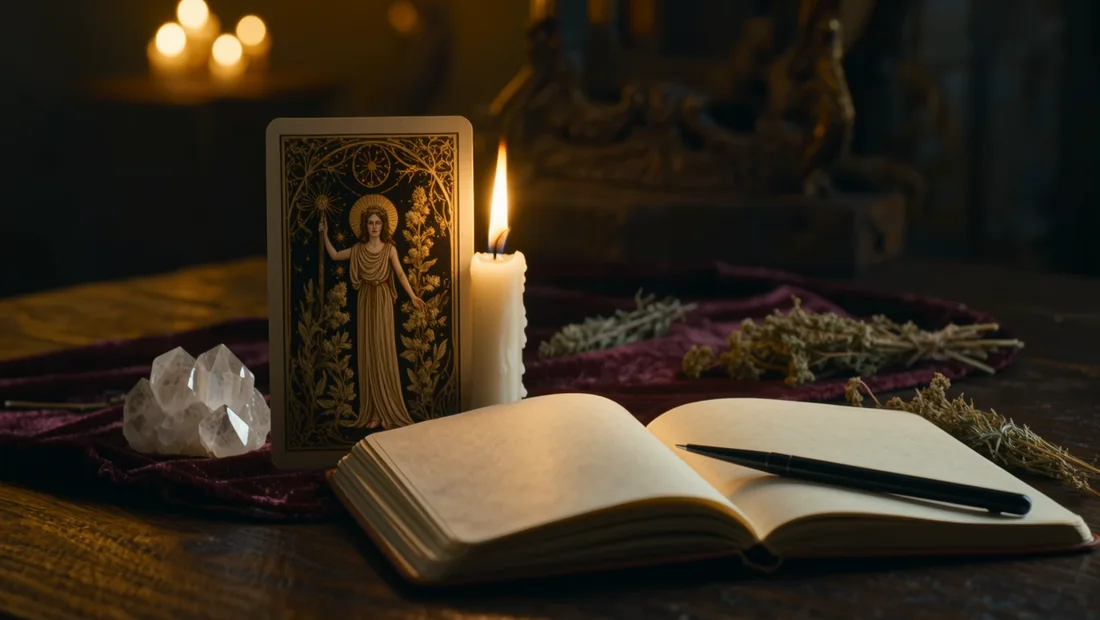
The Hierophant and Other Cards: Quick Combinations
When the Hierophant appears beside another card, let the pairing show how tradition, values, or guidance is shaping the situation rather than treating either card as a fixed verdict.
- With the Lovers, the cards can point to a relationship choice guided by shared values, honest commitment, and a clear conversation about what each person believes a lasting partnership should involve.
- With the Emperor, the combination highlights structure and authority, which may support wise leadership and dependable boundaries or reveal a situation where rules have become too rigid.
- With the Fool, you may be weighing a familiar path against a fresh beginning, so ask which traditions offer useful support and which ones are holding back your curiosity.
- With the High Priestess, the pairing encourages you to balance teachings received from others with the quieter knowledge you have gathered through reflection.
- With the Devil, inherited beliefs or social expectations may deserve a closer look, especially if they are shaping your choices through guilt or obligation.
- With the Star, a trusted spiritual practice can become a gentle source of hope while still leaving room for healing, personal meaning, and a direction that feels like your own.
My picks


When inherited beliefs make a decision feel unclear, light a candle for ten minutes and write three lines: what you were taught, what you still value, and what you choose for yourself today. Let the Hierophant offer a gentle prompt rather than a fixed answer. If you would like another perspective, I offer personal Tarot Readings by email, available afterwards in your client space.
Want Clarity on Your Own Path?
If the Hierophant has stirred questions about tradition, belief, or your next step, a personalised tarot reading can help you hear your inner teacher. I'll tune into your energy and send you a compassionate, detailed PDF, no fear, just guidance.
View Tarot ReadingsFrequently asked questions
Is the Hierophant a yes or no card?
The Hierophant usually leans toward yes when you are considering a traditional path, a formal commitment, or guidance from an established source. Its answer depends on context rather than a fixed rule. Reversed, the card encourages you to question conventions, seek your own understanding, and decide whether the usual route genuinely fits your values.
What does the Hierophant mean in a love reading?
In a love reading, the Hierophant can point to commitment, shared values, or a relationship moving toward a formal stage. It may also invite an honest look at expectations inherited from family, culture, or society. Ask whether the relationship feels aligned in daily life, rather than choosing a future simply because it appears respectable.
Is the Hierophant about religion?
Religion can be part of the Hierophant’s meaning, especially when questions involve ritual, faith, or spiritual teaching. More broadly, the card represents belief systems, inherited traditions, institutions, and sources of authority. It can also turn your attention inward, helping you identify the principles and quiet guidance that shape your own decisions.
How do I know if I should follow tradition or break free?
Notice how each option feels in your body before deciding. A path that brings steadiness, openness, and peace may deserve further attention, while persistent tension can signal a need to pause and reassess. The Hierophant invites discernment rather than blind obedience. Write down the tradition’s value, its cost, and what you would choose freely.
Can the Hierophant indicate a mentor or teacher?
Yes, especially when the Hierophant appears upright. It can suggest that a mentor, teacher, coach, or spiritual guide is entering your life, or that you are ready to seek informed support. Look for someone whose actions match their teachings. A useful first step is to define the specific skill or question you want help with.
Tarot readings and spiritual guidance are offered for personal reflection and entertainment. They do not replace medical, legal or financial advice.
Related posts
 Three of Wands in Tarot: Meaning, Love & Reversed
 Celtic Cross Tarot Spread: How to Read It
 Wheel of Fortune Reversed: Meaning & Guidance