


Tarot for Beginners: How to Read the Cards
You learn to read tarot by trusting what you notice in the imagery before you look up a single definition. If you hold a fresh deck and wonder about tarot for beginners how to read the cards without memorising seventy-eight booklet entries, you simply need a grounded way to begin. Sitting with cards often brings a quiet hesitation, especially when an illustration feels stark or unfamiliar.
This guidance speaks to anyone sitting at a quiet table, hoping to reflect on love, untangle a restless evening, or understand a sudden shift in life. A five-minute daily draw helps you recognise the visual story, meet challenging symbols with calm clarity, and trust your personal impressions over rigid rules.
In short
- You don't need to memorise 78 cards before your first reading; start with one card a day and let the image speak first.
- A simple three-card spread (past, present, next step) teaches you to read cards as a story rather than isolated definitions.
- Keeping a short card journal is what actually builds intuition over weeks, not buying more decks.
- A professional reading is an outside perspective for moments when you're too close to a situation, never a substitute for your own practice.
How Do You Start Reading Tarot Cards as a Beginner?
Begin with one card a day, an open question, and a few quiet minutes with the image in front of you. If your deck is sitting on the table while your hand hovers over it, you already have enough to start. Shuffle slowly, ask, “What do I need to know today?”, then draw a single card. A broad question gives the card room to reflect your mood, attention, or the situation unfolding around you.
Before opening a guidebook, study the picture for two or three minutes. What catches your eye first? Notice the colours, facial expressions, weather, objects, direction of movement, and the feeling in your body. Write one or two plain observations, such as “the figure is looking away” or “the sky feels heavy”. Your first response gives the card a personal doorway, while traditional meanings add context afterwards.
You do not need to memorise all 78 cards before you begin. Keep your first practice small: record the date, your question, the card, your immediate impression, and one way its theme appeared during the day. Some cards may feel familiar quickly; others can stay unclear for a while. That is part of learning how to read tarot cards for yourself. A daily draw builds confidence through attention rather than pressure, and a personalised tarot reading for guidance can offer another perspective when you want support with a situation that feels too tangled to view alone.
What Do the Cards Actually Mean? A Simple Way to Learn
Tarot becomes easier when you read each card as part of a simple structure rather than memorising 78 separate definitions.
- The Major Arcana points to larger life themes, turning points, inner lessons and experiences that may shape a meaningful chapter of your life.
- The Minor Arcana speaks through everyday moments, such as a conversation, a decision, a change at home or a shift in your mood.
- The four suits show the area of life where the message may be unfolding: Cups relate to feelings and relationships, Pentacles to money, home and the body, Swords to thoughts and words, and Wands to action, desire and creative energy.
- The numbers create a movement through experience, beginning with the Ace as a seed or opening and developing towards the Ten, which often suggests completion, fullness or the results of what came before.
- You can read a numbered card by combining its suit with its number, so a Two of Cups may suggest an emotional meeting point, while an Eight of Pentacles may point towards repeated effort in practical work.
- Court cards can represent people, attitudes or energies appearing in a situation, and a Page may show learning, a Knight movement, a Queen inward maturity and a King steady expression of the suit.
- A court card does not assign a permanent personality to anyone; the same Queen can reflect your own emotional steadiness in one reading and another person’s influence in the next.
- Start with the picture, then add the card’s suit, number or rank, and finally consider your question, because the surrounding context gives the meaning its direction.
- If a traditional meaning feels distant, write down the detail your eyes notice first and ask what it suggests about the situation, allowing your personal response to sit alongside a guidebook definition.
- This gentle approach can strengthen confidence in a personal reading and leave space for a confidence tarot reading focused on self-trust when you want another perspective.
A Three-Card Spread You Can Actually Remember
Settle your question
If you freeze with the deck in your hands, begin with one situation you can name clearly. Sit somewhere quiet, place both feet on the floor, and ask: “What would help me understand this situation today?” Keep the question open enough for insight to arise, while giving the reading a useful focus.
Draw the first card
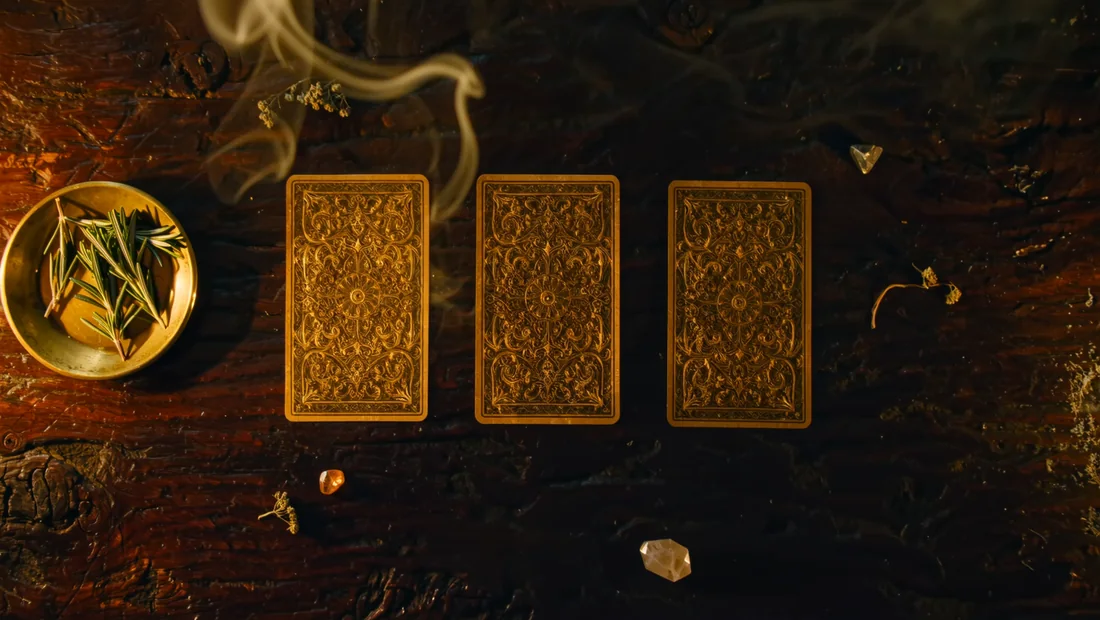
Place one card on the left and read it as what is really going on. Look at the image before checking a guidebook. Notice the emotion, movement, symbols, or body language that catches your attention. Write down one plain sentence about the situation.
Place the second card
Put the next card in the centre. This position shows what you are not seeing. It may point to an overlooked feeling, an assumption, a helpful resource, or a pattern affecting your view. Let the card add information rather than forcing it to confirm your first thought.
Choose the next step
Place the third card on the right and read it as the next gentle step. Keep the action small and specific, such as sending one honest message, waiting before replying, or taking an evening to rest. A helpful reading gives you something you can consider or do today.
Read the story aloud
Join the cards into one sentence: “This is what is happening, I may be missing this, and I can respond by taking this step.” Notice how the cards speak to one another through repeated colours, numbers, directions, or moods. If the situation involves a major decision, a dedicated crossroads tarot reading can offer another perspective alongside your own reflection.
What If You Pull a Scary Card?
A frightening card does not predict disaster; it offers a picture of energy, patterns, or a turning point that may already be present in your life. When a beginner turns over Death, The Tower, or the Ten of Swords, the image can feel intensely personal. These cards often speak about endings, sudden change, release, exhaustion, or the need to leave an old pattern behind. Their meaning depends on the question, the surrounding cards, and what you recognise in your current circumstances.
Try replacing “When will this happen?” with “Where is this energy showing up in my life right now?” Death might reflect a friendship changing shape, The Tower may mirror a belief that has been shaken, and the Ten of Swords can describe the emotional edge of a chapter that has run its course. Write down the first situation, feeling, or memory that comes to mind before opening a guidebook. That response gives the card a personal doorway.
Reversed cards can be read as the same energy turned inward, delayed, hidden, or moving more slowly. A reversed Tower may suggest private upheaval or a change you are resisting, while a reversed Ten of Swords might point towards gradual recovery. You can turn the card upright if reversals make you freeze, then return to them when your confidence grows. A short pause, three steady breaths, and a glass of water can help you read with curiosity rather than alarm.
Building a Card Journal That Actually Teaches You
A useful tarot journal turns each draw into a small lesson, even when your first notes feel uncertain or untidy.
Set the date
Write the full date before you turn to the card, along with the question or situation in one short line. Add the card’s name and whether it appeared upright or reversed, if you use reversals.
Record your first impression
Look at the image for a minute before checking a guidebook. Write one sentence about what you notice first: a colour, a facial expression, an object, the direction a figure faces, a feeling in your body. “The figure looks guarded” teaches you more over time than copying a long list of keywords.
Return to the moment
Later that day, or the next morning, add one sentence about what happened. Keep it ordinary and specific, such as, “I avoided a difficult conversation,” or, “A friend offered help.” This creates a bridge between the picture and your lived experience.
Leave the page imperfect
Allow crossed-out words and half-formed thoughts, and don’t worry about uneven handwriting. Pretty pages can be lovely, yet messy notes often preserve the honest details your memory would smooth away. You can also record repeating numbers or meaningful timing alongside your cards, as you might with mirror hours and universal signs.
Review each month
At the end of four weeks, skim every entry. Circle the cards that keep returning, the emotions you noted most often, and the subjects you wrote about again and again. Notice which images you now recognise without looking them up. That growing familiarity is a quiet sign that your own visual language is taking shape.
When a Professional Tarot Reading Helps (and When It Doesn't)
A professional tarot reading helps when you are standing at a crossroads, circling the same decision, or carrying a story that feels difficult to name on your own. After a breakup, during a career change, or while moving through grief, another person can offer structure and language for what you are already sensing. A session may help you see a repeated pattern, clarify your priorities, and form a gentler question for your daily practice.
Choose a reading that matches the question in front of you. For relationship uncertainty, a love and soulmate reading may give the conversation a clear focus. Work-related choices call for a career reading, while a year-ahead session can help you reflect on themes across several months. The cards offer perspective and possible directions; they cannot guarantee an outcome or make the decision for you.
A paid session may be less useful when you are seeking certainty, asking the same question repeatedly, or hoping someone else will take responsibility for your next step. Give yourself time to write down what resonated, what felt unclear, and which practical action belongs to you. Then return to a simple one-card draw. Your own observations become richer when you use outside guidance as a mirror rather than a substitute for your judgement.
A Small Ritual Before You Draw
Begin with a small, repeatable ritual that helps your body settle before you ask the cards for guidance. It gives the reading a clear beginning and creates a gentle ending when you are ready to stop.
Light one candle
Place your deck on a clear surface and light a candle nearby. Choose a stable holder, keep it away from loose fabric, and let the flame provide a quiet point of focus. You can add a simple cleansing practice from Spells & Energy Cleansing if that feels supportive.
Take three slow breaths
Inhale gently, then exhale without forcing the breath. Repeat three times, allowing your shoulders, jaw, and hands to soften. Notice the chair beneath you and the surface holding the cards.
Hold your question loosely
Choose one clear subject, such as how to approach a conversation or what deserves your attention today. Let the question remain open rather than demanding a particular answer. You are making space for reflection, rather than testing the deck.
Speak one sentence
Say aloud, “Show me what I need to see today.” The words can mark your intention and help you listen to your first impression before reaching for a guidebook.
Shuffle until your hands feel calm
Shuffle slowly for as long as you need. When the cards feel comfortable in your hands, draw your card or spread. When you finish writing or reflecting, thank the deck, extinguish the candle safely, and close the deck. That final movement tells your mind the reading is complete.
My picks



The most useful habit is a one-card journal: draw a card, study its image for two quiet minutes, write three details and one question, then revisit your note in the evening. When I feel too close to a situation, a simple three-card story offers helpful distance, with each card acting as a prompt rather than a verdict. For another perspective, you can browse a blind psychic reading with intuitive guidance.
Want a second pair of eyes on your cards?
If you've been pulling the same cards and can't see the pattern, a personalized reading can offer the outside perspective your own draw can't. Your first consultation is free with the code WELCOME.
View Blind Psychic Reading No Questions AskedFrequently asked questions
Do I need a specific tarot deck to start?
No specific tarot deck is required to begin. Any deck with clear, engaging imagery can teach you, especially when you enjoy looking at its pictures. Choose one that feels readable and inviting. Spend a few minutes studying one card daily, allowing your first impressions to guide the keywords.
How long does it take to learn to read tarot?
Most beginners recognize familiar cards within a few weeks of drawing one card each day. Reading complete spreads with ease usually takes several months of steady practice. Progress comes through noticing images, recording your interpretations, and comparing them with traditional meanings. Memorization helps, though repeated observation builds fluency more naturally.
Can I read tarot for myself?
Yes, reading for yourself is one of the best ways to learn. A daily pull gives you practice with meanings, symbols, and changing contexts. Your closeness to the situation can make interpretation harder when emotions run high. Write the question down first, then seek an outside reading if you feel stuck.
What does it mean if I keep pulling the same card?
Repeated cards usually point toward a theme asking for attention. Record the card, your question, and what happened that day in a journal. After several entries, look for a shared feeling, choice, or situation. Then ask, “What is this energy asking me to notice or address?” Treat the pattern as a prompt for reflection, rather than a fixed prediction.
Are reversed cards necessary for beginners?
Reversed cards are optional for beginners. Many readers start with every card upright, learning the imagery and core meanings before adding another layer. If you use reversals, read them as the same energy turned inward, slowed, blocked, or expressed quietly. Give yourself a consistent method and practice with it for several weeks.
Tarot readings and spiritual guidance are offered for personal reflection and entertainment. They do not replace medical, legal or financial advice.
Related posts
 Three of Wands in Tarot: Meaning, Love & Reversed
 Celtic Cross Tarot Spread: How to Read It
 Wheel of Fortune Reversed: Meaning & Guidance